
.png)
Duroflex asks for a referral at the moment a mattress buyer is most convinced
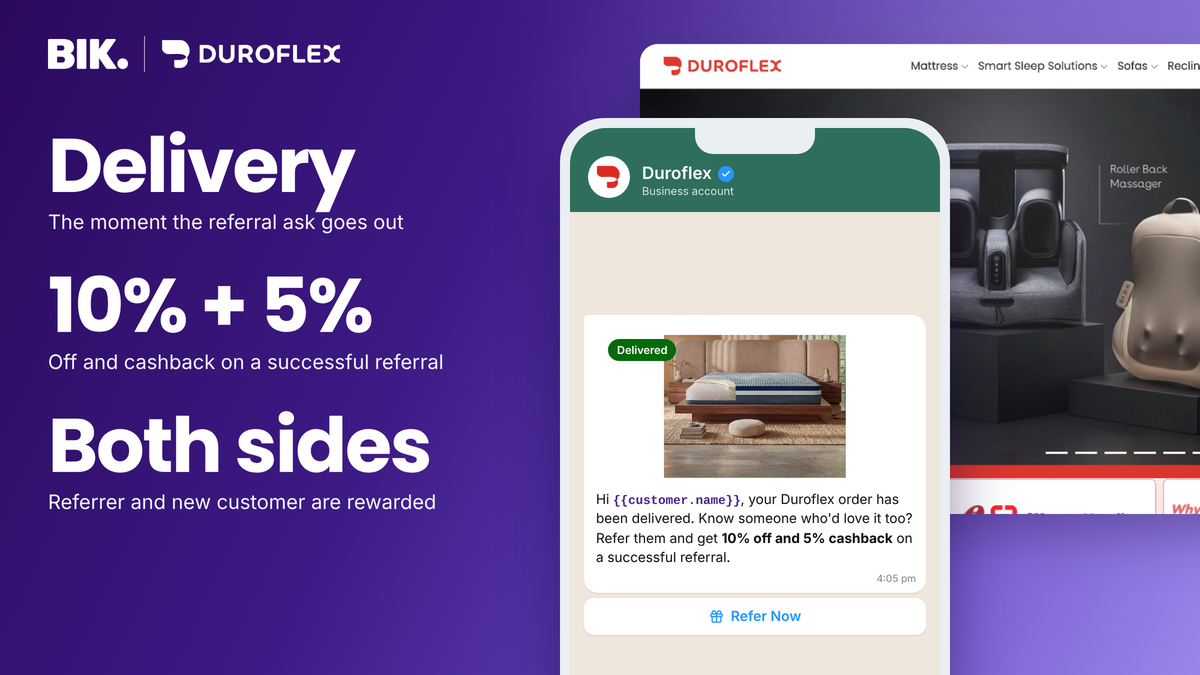
Referral programs are often added to a brand's website as a static page, with a link, a discount code and a loose promise of rewards, tucked away in the footer where few people look unless they're already searching for it. That placement is the core weakness of most referral programs. They ask for a referral at a moment with no emotional context, disconnected from whatever made the customer happy with the brand.
Duroflex built its referral flow, ReferRush, around a specific trigger instead: order delivery. As soon as a completed purchase is marked delivered, an API trigger sends a WhatsApp message inviting the buyer to refer someone, offering 10% off and 5% cashback on a successful referral. Both the referrer and the new customer are rewarded, which takes away the awkwardness of asking a friend to buy something only for your own benefit.
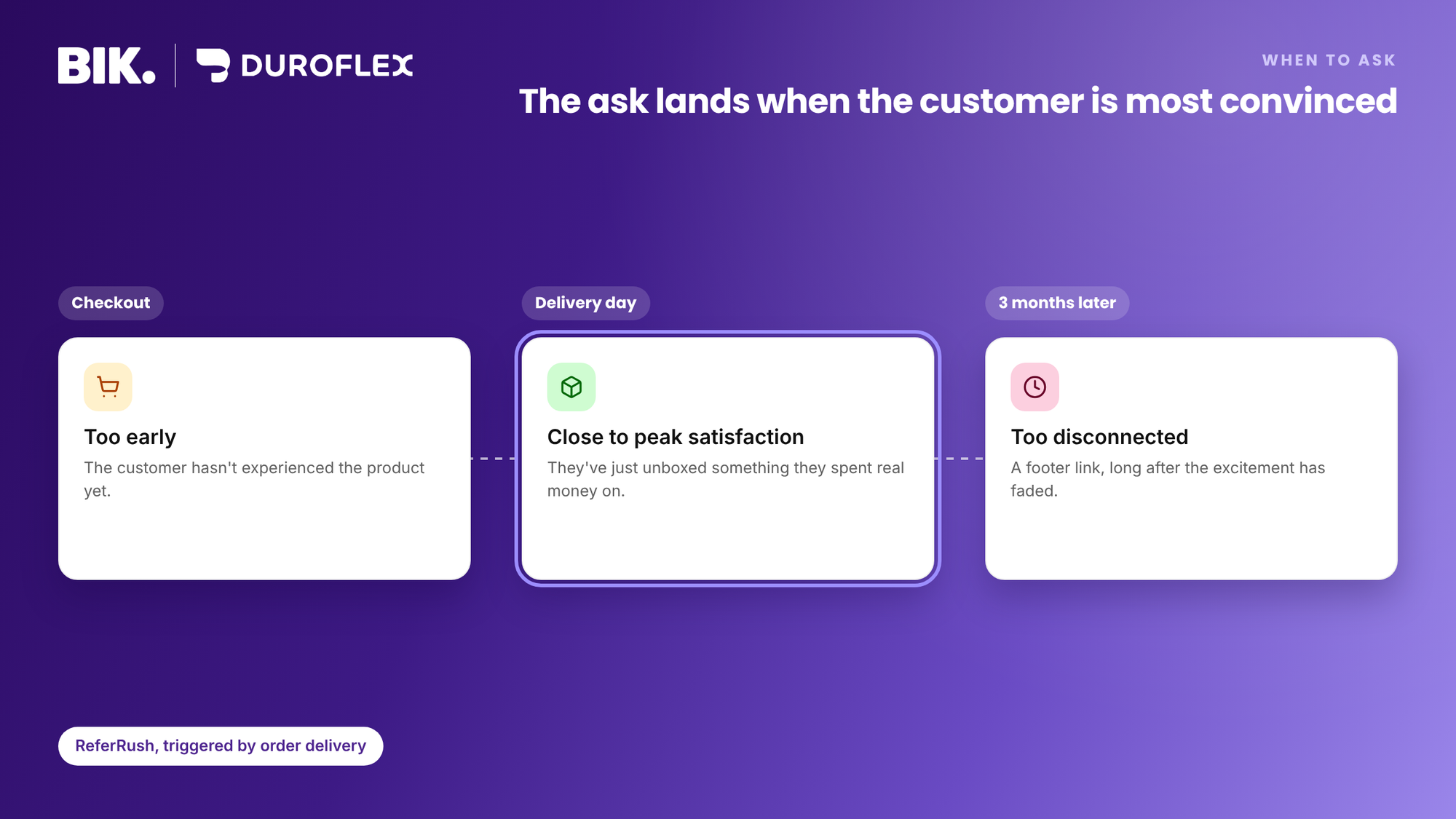
The timing is the mechanic to study here, even more than the reward structure. Delivery day is close to peak satisfaction for a considered purchase like a mattress. The customer has just unboxed something they spent real money on and, if the product is good, is feeling positive about the decision. That's a very different state of mind from someone coming across a footer referral link three months later, when the excitement has long faded.
A Refer Now button leads directly into a welcome flow for the referred customer, so the mechanic doesn't end with the referrer's message. It carries through to onboarding the person who was referred, instead of dropping them on a generic landing page that ignores the fact that a friend sent them.
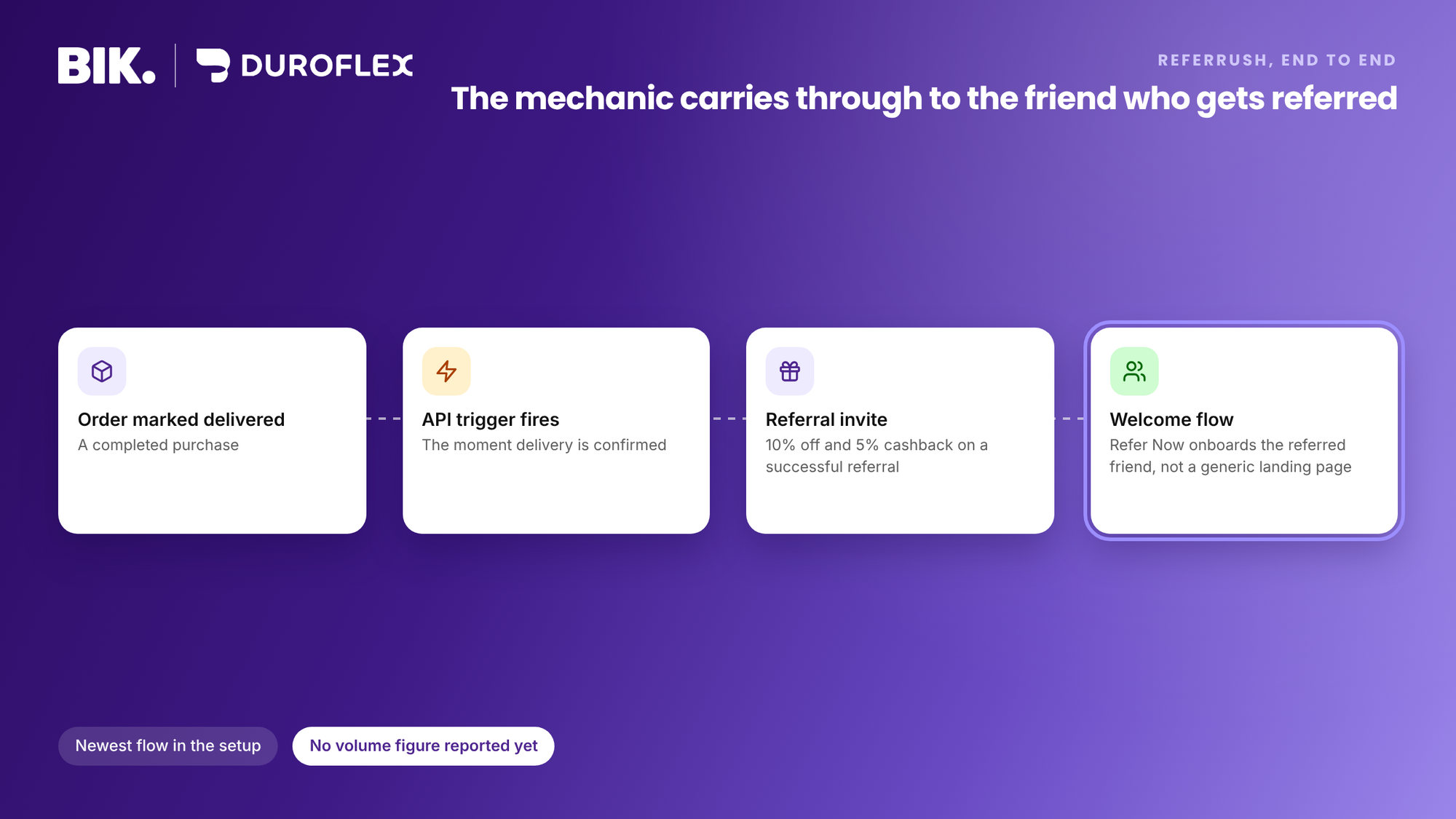
This is the newest flow in Duroflex's setup, and it's fairer to say so than to reach for a number that doesn't exist yet. It went live recently, and there's no meaningful revenue or referral-volume figure to report at this stage. A flow needs time and volume to produce a trustworthy number, and reporting one too early would be more misleading than reporting none.
What can be evaluated now, before results arrive, is the design decision itself: ask at delivery, rather than at checkout or months later. Checkout is too early, because the customer hasn't experienced the product yet. A generic footer link is too far removed from any moment of satisfaction. Delivery day sits closer to the point where the customer's own experience of the product, as opposed to the brand's messaging, is doing the persuading.
If you're running or planning a referral program, there's one question to answer before you work on the reward structure: when is your customer most convinced, and is your ask happening anywhere near that moment?
See how this would work on your store
If you want to build a flow like this for your own store, book a meeting with the Manifest AI team and we will walk you through it in a live demo.
