
8 Problems Ecommerce Teams Face Without Unified Campaign Management
Running email, WhatsApp, SMS and push campaigns in separate tools leads to over-messaging, clashing offers and double-counted revenue. Here are the 8 most common problems and how unified campaign management fixes them.
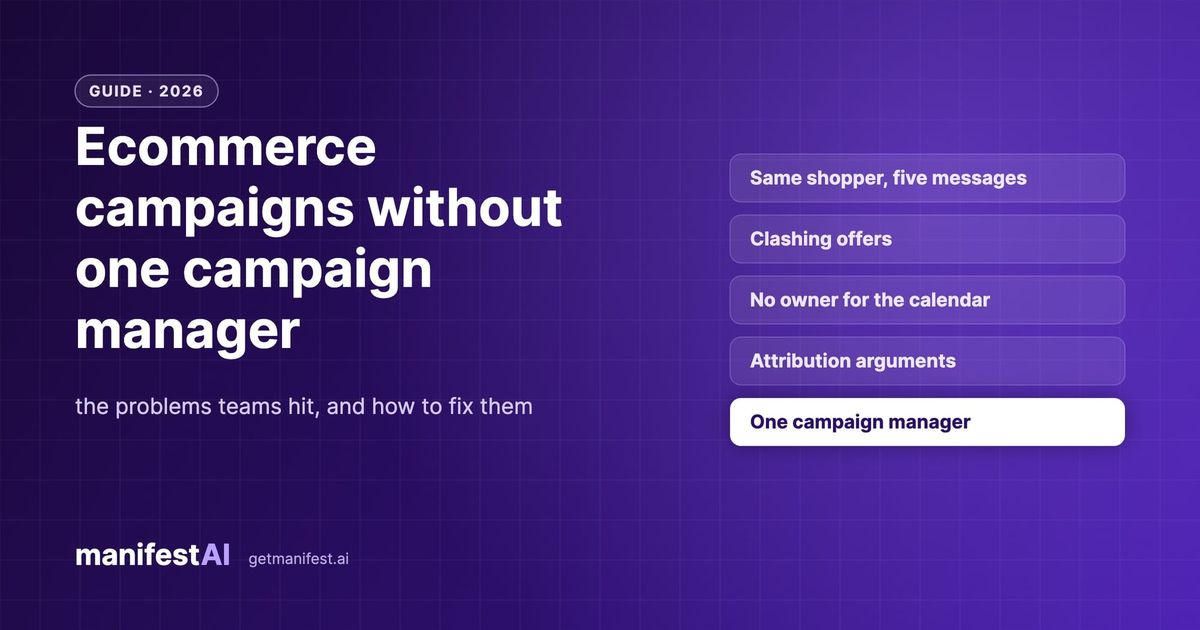
Without unified campaign management software, ecommerce teams run email, WhatsApp, SMS and push campaigns in separate tools, and the same problems keep coming back: customers get too many messages, offers clash across channels, nobody owns the calendar, segments go out of date, and every channel claims the same sale. The result is wasted message spend, rising unsubscribes and decisions made on guesswork. A unified campaign manager plans, sends and measures every channel from one customer profile and one calendar.

The 8 problems teams face without unified campaign management
1. The same shopper gets five messages in a day
When email, WhatsApp, SMS and push each have their own scheduler, nobody sees the total load on one customer. A loyal buyer can get a sale email, a WhatsApp broadcast, an SMS and two push notifications on the same afternoon. Unsubscribes, blocks and spam reports follow, and on WhatsApp, blocks and low engagement can hurt your number's quality rating.
Fix: one view of every scheduled message per customer, with frequency caps across channels.
2. Offers clash across channels
Email announces 20% off while a WhatsApp flow still offers 10%, or a cart reminder discounts a product that is already on sale. Customers screenshot the better deal and ask support to match it.
Fix: one campaign brief that drives every channel, so offer, timing and creative stay consistent.
Juggling five tools for one campaign? BIK runs WhatsApp, email, SMS and push campaigns from one place, and Manifest AI answers every reply.
3. Nobody owns the calendar
The email marketer, the WhatsApp manager and the performance team each plan in their own sheet. Launches overlap, festive and sale periods get crowded, and quiet weeks go untouched.
Fix: a shared campaign calendar across channels, visible to everyone who sends.
4. Segments are rebuilt in every tool
Each platform needs its own audience lists, so the same "bought twice, not in 60 days" segment is rebuilt three times with slightly different rules. Lists go stale and customers who already bought keep getting acquisition offers.
Fix: segments built once on a single customer profile with live Shopify order data, used by every channel.
5. Every channel claims the same sale
Email, WhatsApp and SMS dashboards each count the order, so reported campaign revenue adds up to far more than actual revenue. Budget conversations turn into arguments about whose numbers are right.
Fix: one attribution model and one revenue report across channels.
See what your brand could automate. Our team builds the agents for you, and most brands are live in about 2 weeks.
6. Failed messages are nobody's job
Messages fail for many reasons: template rejections, invalid numbers, delivery limits. In disconnected tools, failures sit in separate logs and nobody resends to the people who missed the campaign.
Fix: centralised delivery reporting with automatic retries. For WhatsApp specifically, see why WhatsApp marketing messages fail and how to fix each error.
7. Campaigns and automations step on each other
A one-off broadcast goes to people who are in the middle of an abandoned cart or post-purchase journey, so they get mixed messages at the worst moment.
Fix: campaigns and journeys that share suppression rules, so a customer in an active flow can be excluded from a broadcast.
8. Replies land nowhere
WhatsApp and Instagram campaigns invite replies. Without a connected inbox or AI agent, questions about the offer go unanswered and the sale is lost.
Fix: an AI agent and helpdesk on the same platform as the campaign, so every reply gets an answer in seconds.
What unified campaign management software does
- One customer profile combining Shopify orders, browsing, consent and engagement across channels.
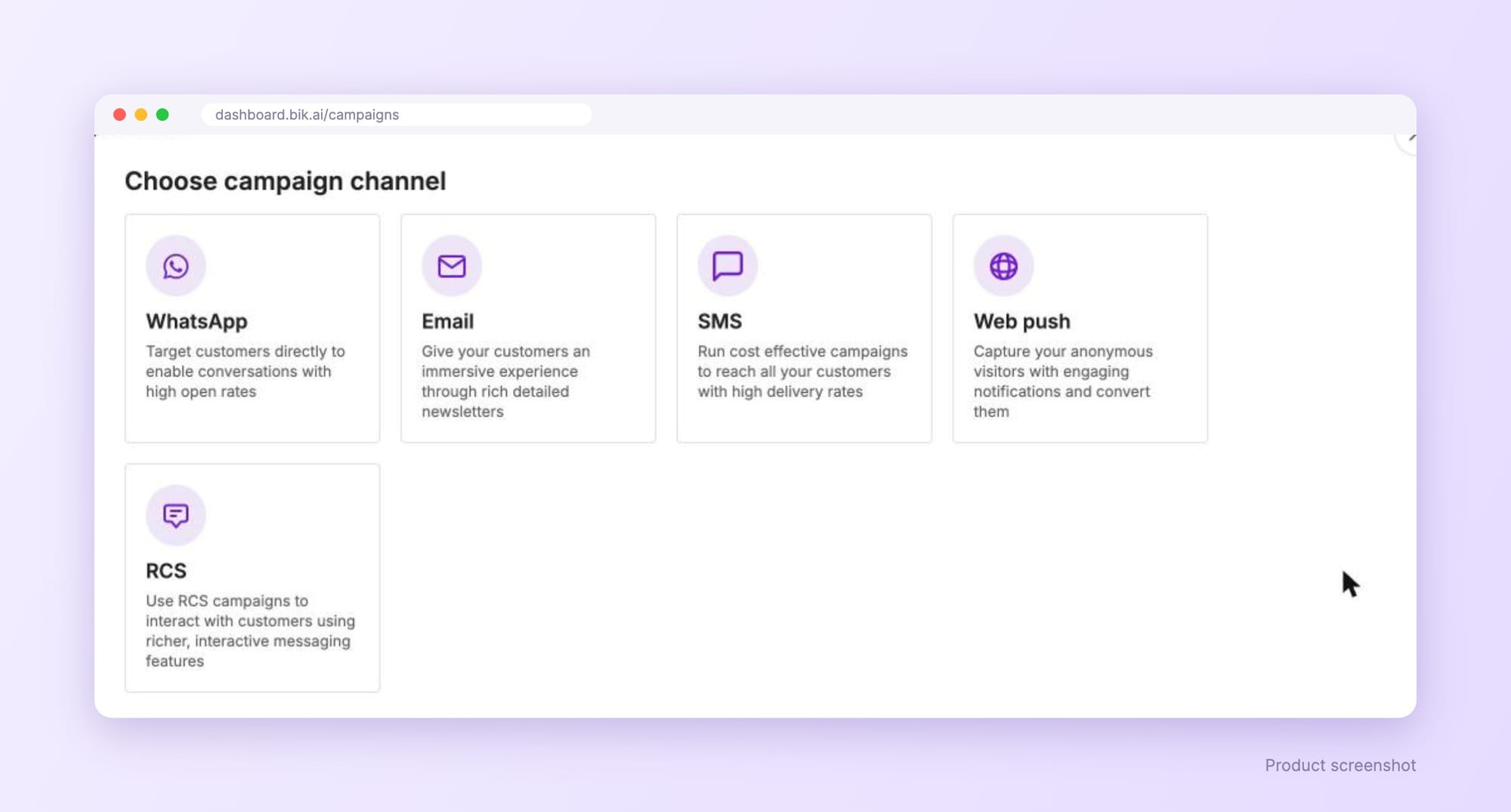
- Every channel in one place: WhatsApp, email, SMS, web push and RCS, launched from a single campaign workflow.
- Shared segments and suppression so audiences are built once and frequency is capped across channels.
- Journeys alongside campaigns for cart recovery, post-purchase, win-back and loyalty, with rules that stop overlap.
- One revenue report that shows cost, revenue and ROI per campaign without double counting.
- AI for replies and timing: agents that answer campaign replies, and recommendations on what to send next.
How BIK handles campaign management
BIK, the marketing platform that works alongside Manifest AI, brings campaigns, journeys, segments, the helpdesk and AI agents onto one customer profile for Shopify brands. Teams launch WhatsApp, email, SMS, web push and RCS campaigns from the same screen, set up recurring campaigns once, retry failed messages automatically and see revenue and cost per campaign in one report. When customers reply, the AI agent answers on the same channel.
Brands on BIK report results such as a 35% increase in repeat purchases within three months at Fuaark, and a 70% increase in repeat purchase rate at Recode Studios.
Checklist: is it time to unify your campaigns?
- You use three or more tools to send marketing messages.
- Customers complain about too many messages, or unsubscribes are rising.
- Your channel dashboards add up to more revenue than Shopify shows.
- Segments are exported and re-imported between tools.
- Campaign replies on WhatsApp or Instagram wait hours for an answer.
If two or more apply, a unified campaign manager will likely save time and money. For a channel-by-channel comparison, read our WhatsApp vs SMS vs email for retention guide.
80%+ of tickets automated, or your money back. That's the Manifest AI guarantee, written into your contract.
FAQ
What problems do ecommerce teams face without unified campaign management software?
Over-messaging, clashing offers, an unowned calendar, duplicated and stale segments, double-counted revenue, unhandled message failures, campaigns that collide with automations, and campaign replies that go unanswered.
What is unified campaign management?
It means planning, sending and measuring campaigns on every channel, such as email, WhatsApp, SMS and push, from one platform that shares customer data, segments, frequency rules and reporting.
Do I need to replace my email tool to unify campaigns?
Not always. Some brands start by moving WhatsApp, SMS and journeys onto one platform and connecting their existing email tool. The goal is one customer profile and one calendar, whichever tools send the messages.
How does unified campaign management improve ROI?
It cuts wasted sends to the wrong people, reduces unsubscribes from over-messaging, avoids unnecessary discounts and shows true revenue per campaign, so budget goes to what actually works.
See campaigns, journeys and AI replies working from one platform. Book a demo.