
.png)
How Ample Imagine keeps every shipping update from failing silently
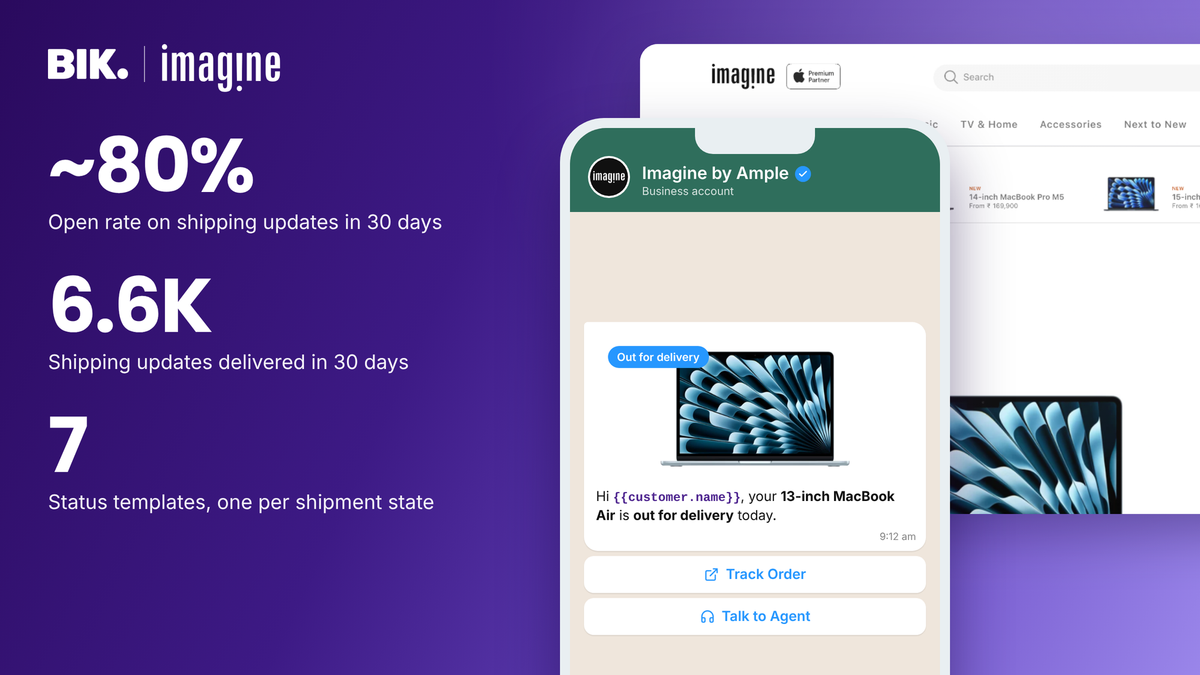
"Where's my order?" is one of the most common messages any support team receives, and it's almost always preventable. The information already exists in Shopify's shipment data. It just isn't reaching the customer when they want it.
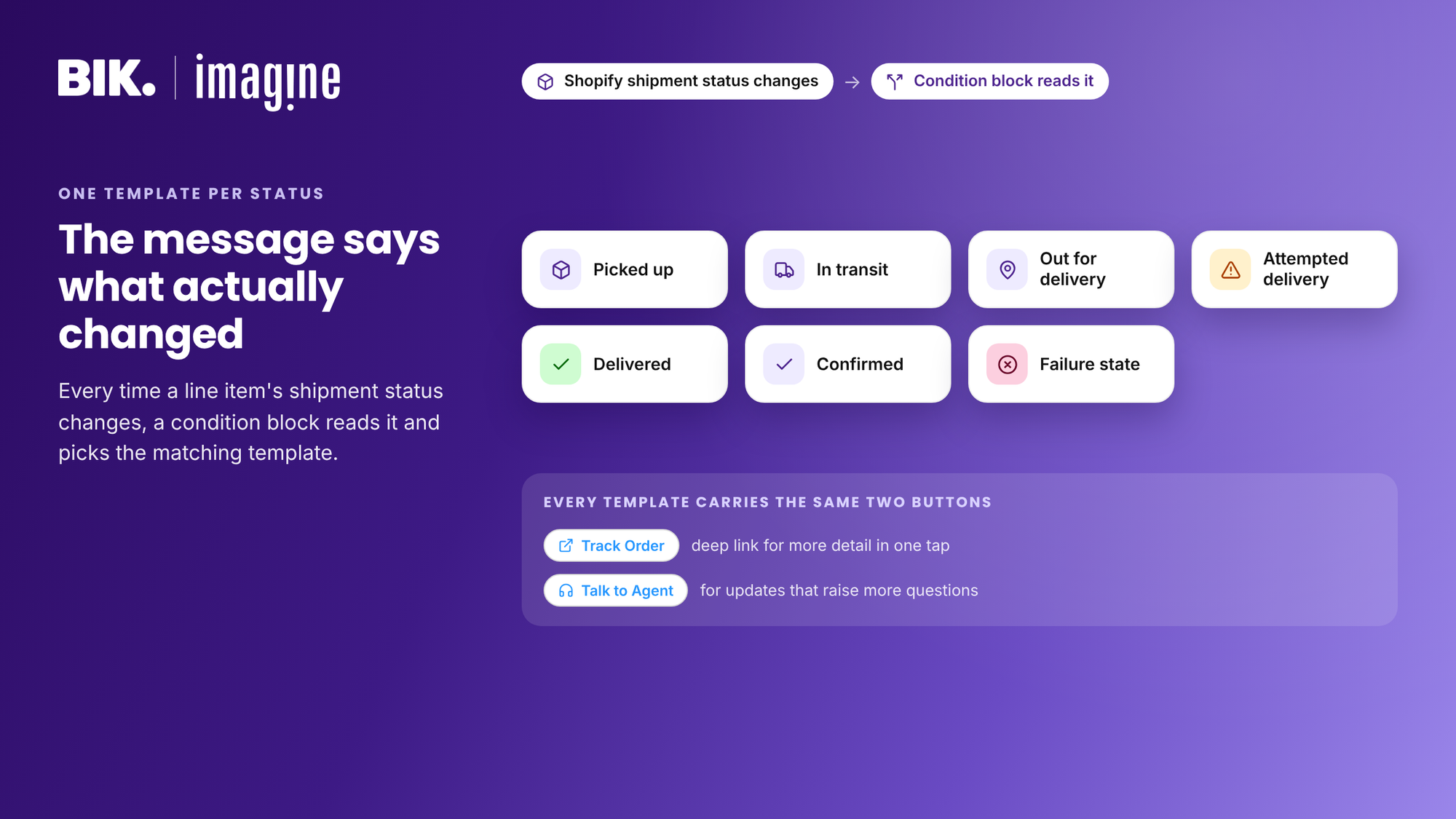
Ample Imagine built a flow to close that gap. Whenever a Shopify line item's shipment status changes, a condition block reads the new status and sends the customer the matching template: picked up, out for delivery, in transit, attempted delivery, delivered, confirmed, or a failure state. Each message describes what is actually happening with the shipment, rather than a generic "your order has an update" that makes the customer click through to find out what changed.
Every template includes the same two options. A Track Order deep link gives customers who want more detail a one-tap route to it, and a Talk to Agent option covers the cases where an update raises more questions than it answers.
The most important part of the flow is the fallback branch. If a shipment's status or tracking URL comes back missing, whether from an integration hiccup or a data gap, the flow doesn't skip the customer or send a broken message. It assigns them straight to a live WhatsApp agent. That one branch is the difference between automating 95% of shipping updates and leaving the other 5% to fail silently, and automating 95% while the remaining 5% still get a real update, from a person rather than a template.
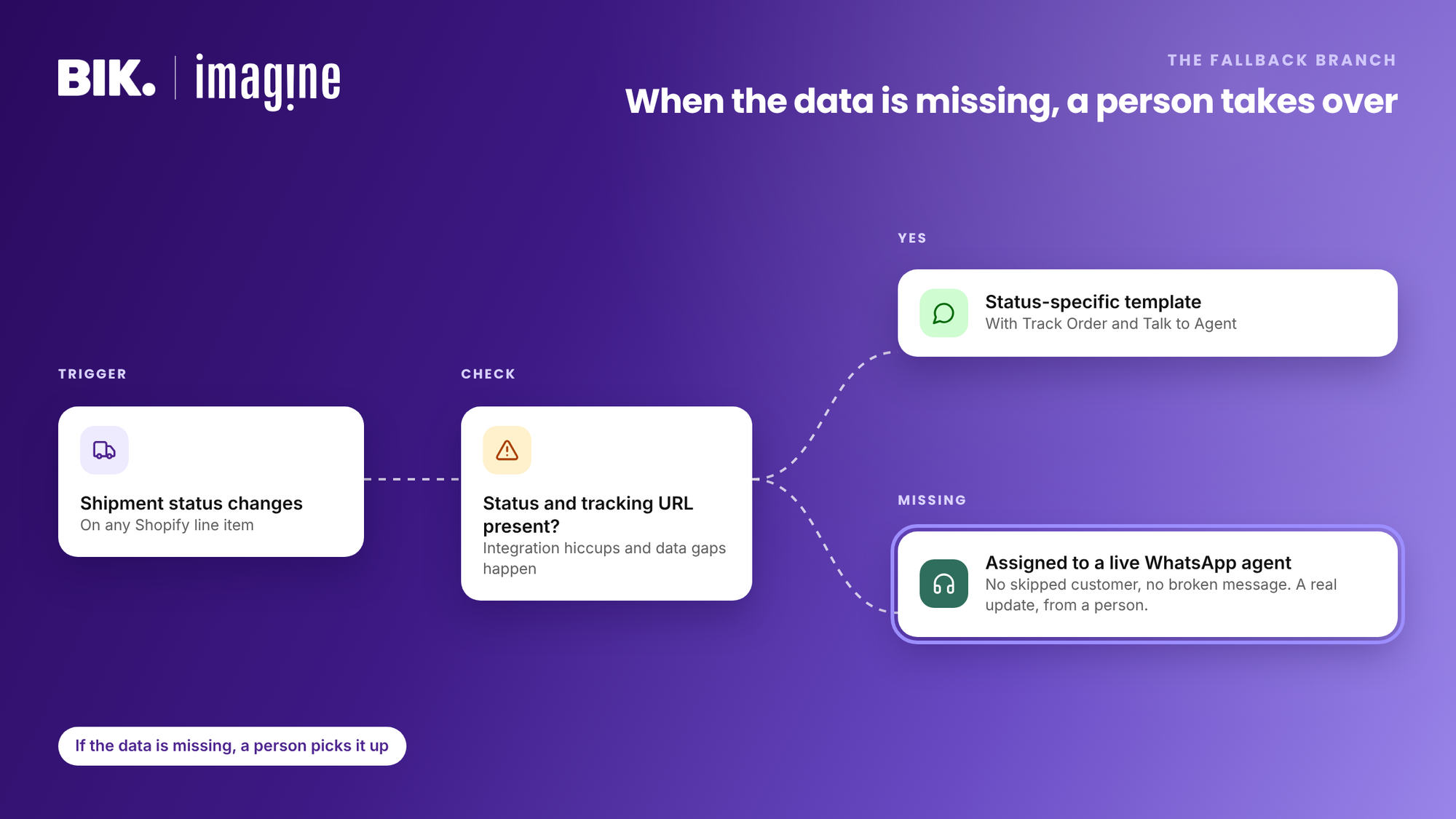
It's an easy detail to overlook in a flow diagram and an expensive one to overlook in practice. Automation that fails silently can be worse than no automation, because it gives the appearance of coverage while leaving gaps nobody notices until a customer complains. Building the fallback in from the start means the flow degrades to a person handling it, never to nothing happening.
Over 30 days, roughly 80% of 6.6K delivered shipping updates were opened. That's a strong result for one of the least exciting messages a brand sends. Customers aren't excited to receive a shipping update, but they open it because it's information they want at the moment they want it, which is a good test for any automated message.
If your store already has shipment status data flowing through Shopify and you aren't messaging customers on every status change, this is one of the more valuable flows to build. It won't drive revenue the way cart recovery does. It will steadily reduce "where's my order" tickets in your support queue, which is a meaningful return of its own.
See how this would work on your store
If you want to build a flow like this for your own store, book a meeting with the Manifest AI team and we will walk you through it in a live demo.
