
.png)
How Ample Imagine matches its cart recovery messages to what's in the cart
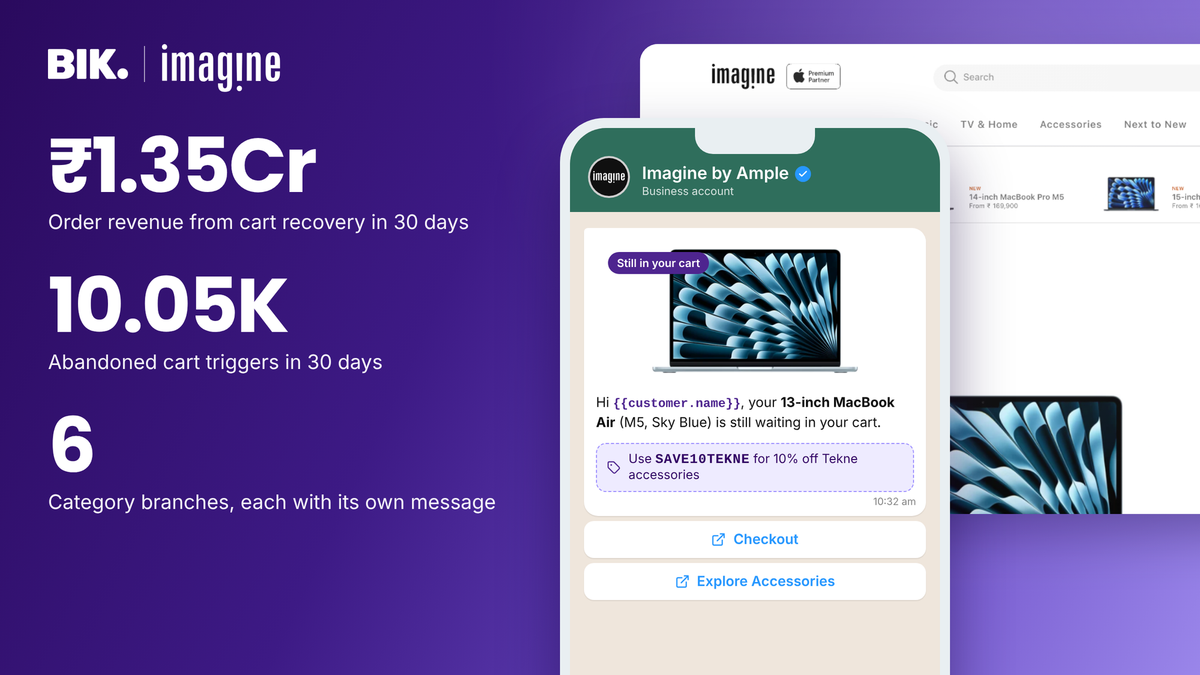
Most abandoned cart flows follow a familiar pattern: a reminder, a coupon, perhaps an urgency push a day later, sent the same way regardless of what the customer left behind. It's a reasonable baseline. It's also easy to treat as finished.
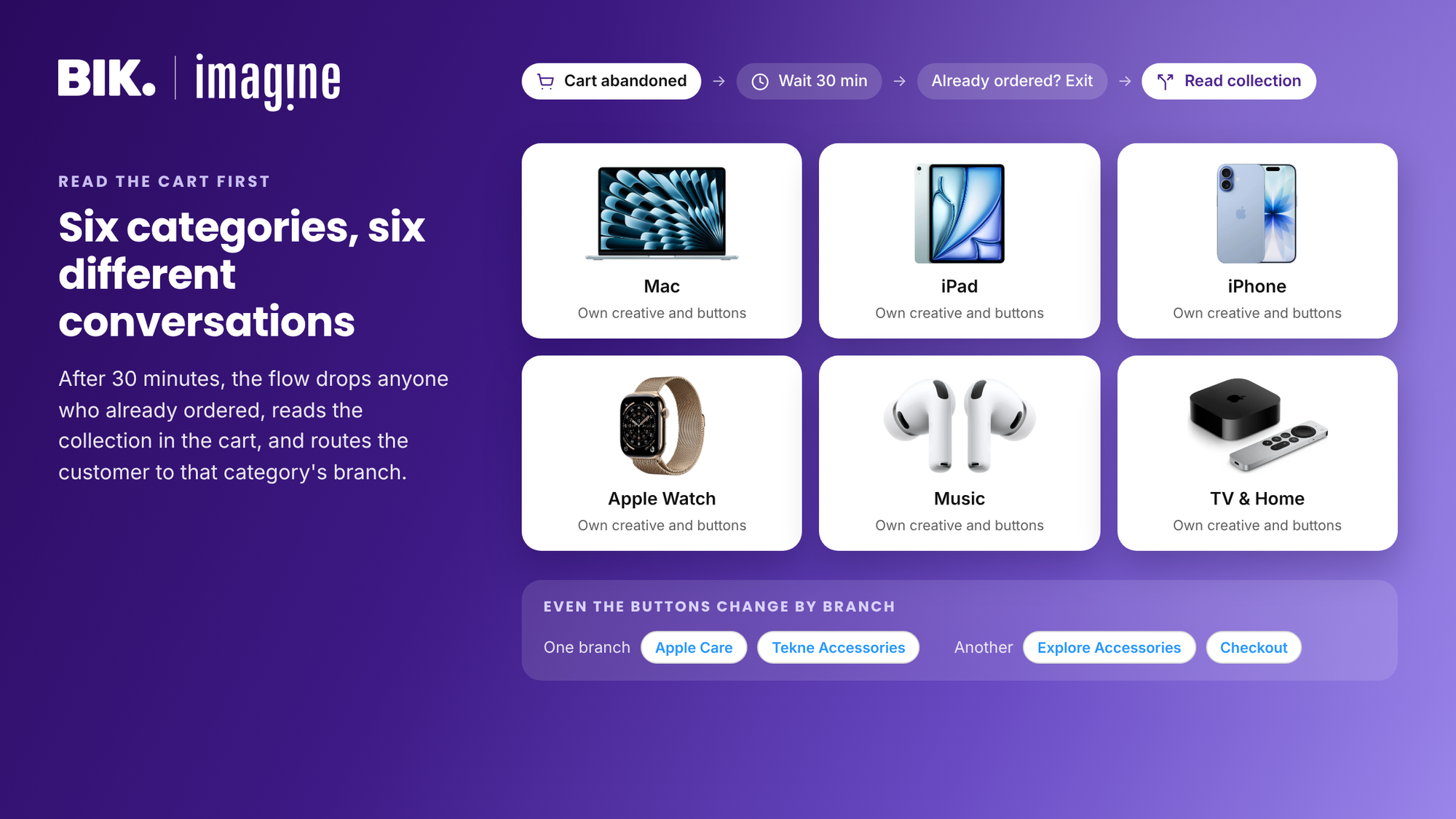
Ample Imagine, which sells Apple products on Shopify, took it further. Its flow waits 30 minutes after a cart is abandoned, which filters out shoppers who were briefly distracted and came back on their own. It then removes anyone who completed an order in that window. What's left gets sorted by the collection in the cart (Mac, iPad, iPhone, Apple Watch, Music or TV & Home), and each collection has its own branch.
This matters because the questions on a customer's mind depend on what they were buying. Someone considering a Mac is weighing different things than someone looking at an Apple Watch. Each branch has category-specific creative, and the buttons change too. One branch offers Apple Care and Tekne Accessories as cross-sells, while another keeps it to Explore Accessories and a direct Checkout button. Each branch is its own conversation, matched to what the customer was about to buy.
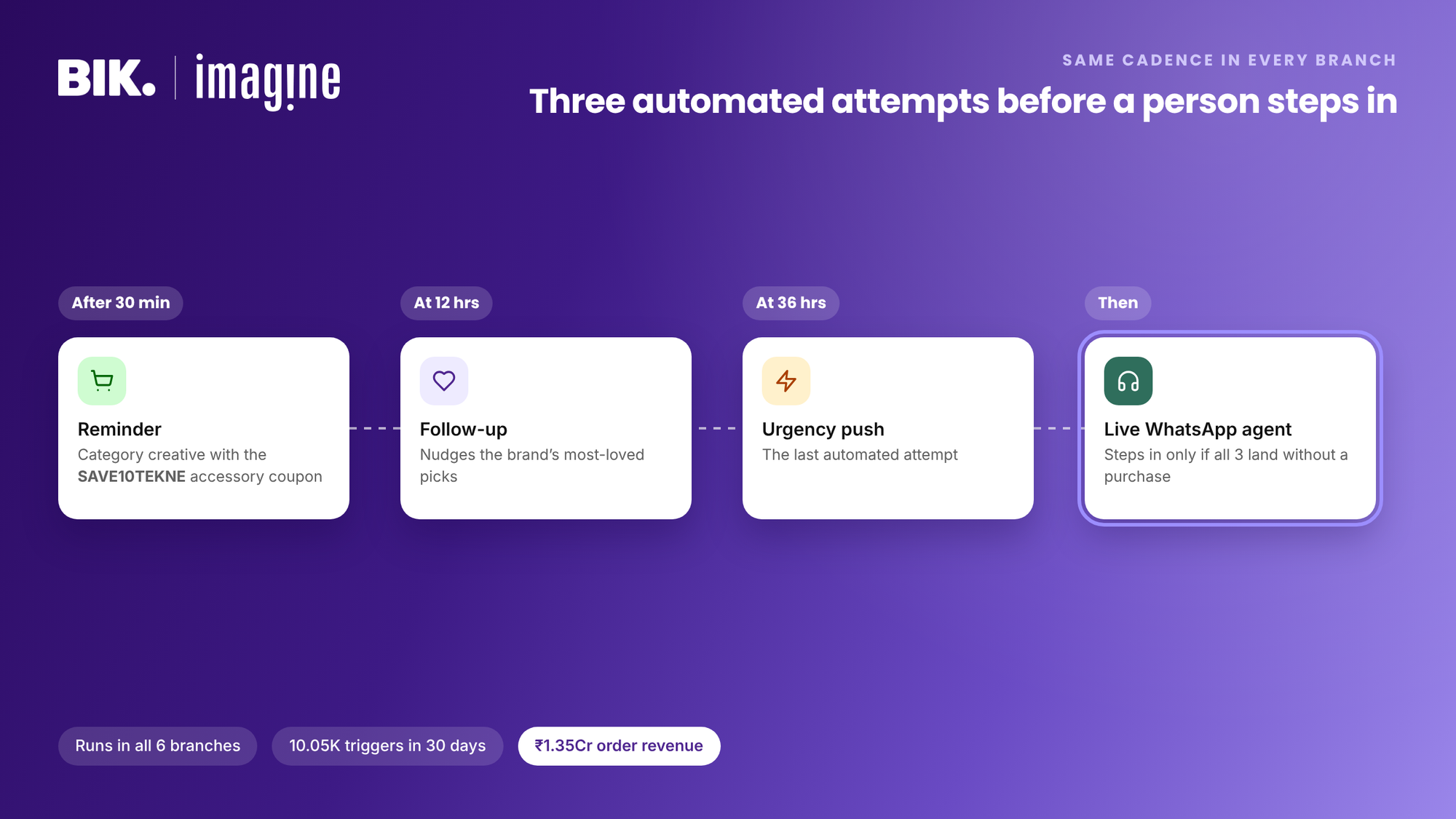
The cadence underneath stays consistent across every branch. The first message is a reminder with the SAVE10TEKNE accessory coupon. A follow-up at 12 hours highlights the brand's most-loved picks, and an urgency push goes out at 36 hours. If none of these leads to a purchase, a live WhatsApp agent takes over. That ordering is deliberate: automation handles the straightforward cases first, and the team's time goes where it's actually needed.
The results reflect the effort. Over 30 days, 10.05K abandoned cart triggers ran through the six branches, attributed to ₹1.35Cr in order revenue. That's the largest figure across all of Ample Imagine's flows on BIK, and it comes from the flow doing the most segmentation. Cart abandonment is already a high-intent moment, since the customer chose a product and added it before stopping short of payment. Matching the follow-up to the category gives that intent a better chance of turning into an order.
It's worth being clear about the cost. Six branches means six sets of creative and six coupon setups to maintain, and any of them can fall out of date when a collection is renamed or a promotion ends. For a store at Ample Imagine's volume, that ongoing work is clearly justified. A smaller catalog with two or three real categories could apply the same thinking with fewer branches.
The underlying principle is a simple one, even if building it takes care: look at what's in the cart before deciding what to say about it.
See how this would work on your store
If you want to build a flow like this for your own store, book a meeting with the Manifest AI team and we will walk you through it in a live demo.
