
.png)
How Lego retargets shoppers who never shared their number
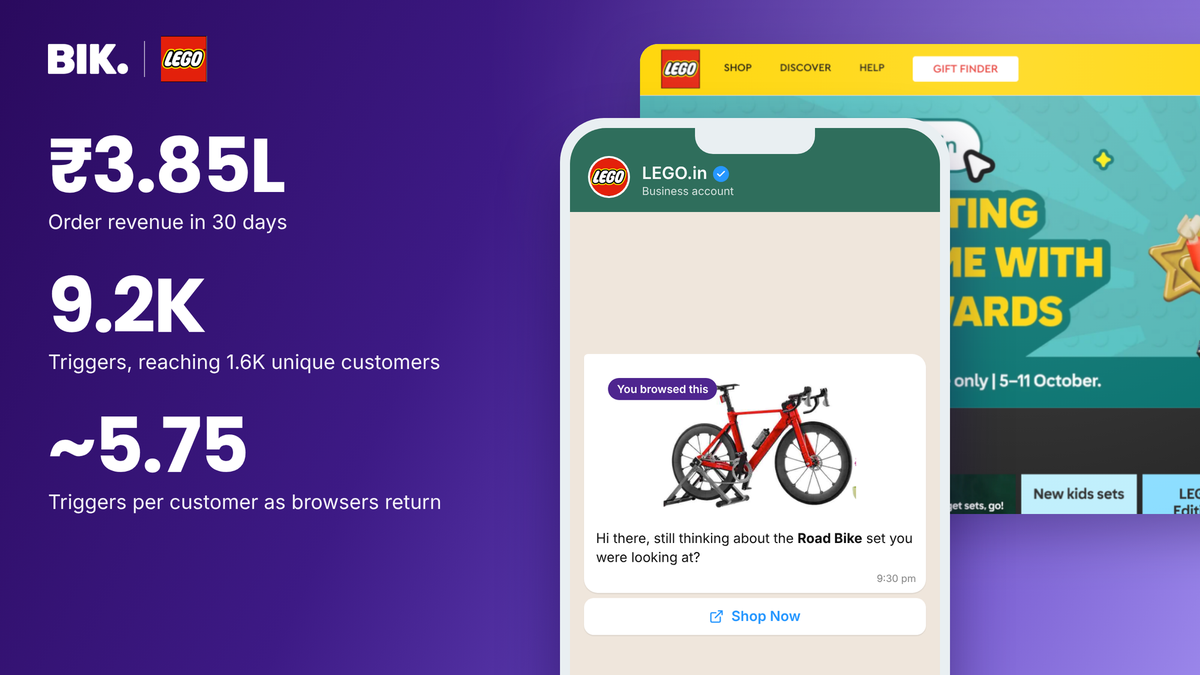
Retargeting has a well-known blind spot: it only works on people you can identify. A customer who browses a Shopify store, looks at a few products and leaves without logging in or filling out a form is invisible to most lifecycle tools. They viewed real products and showed real interest, yet the brand has no way to follow up, because there's no contact detail attached to the visit.
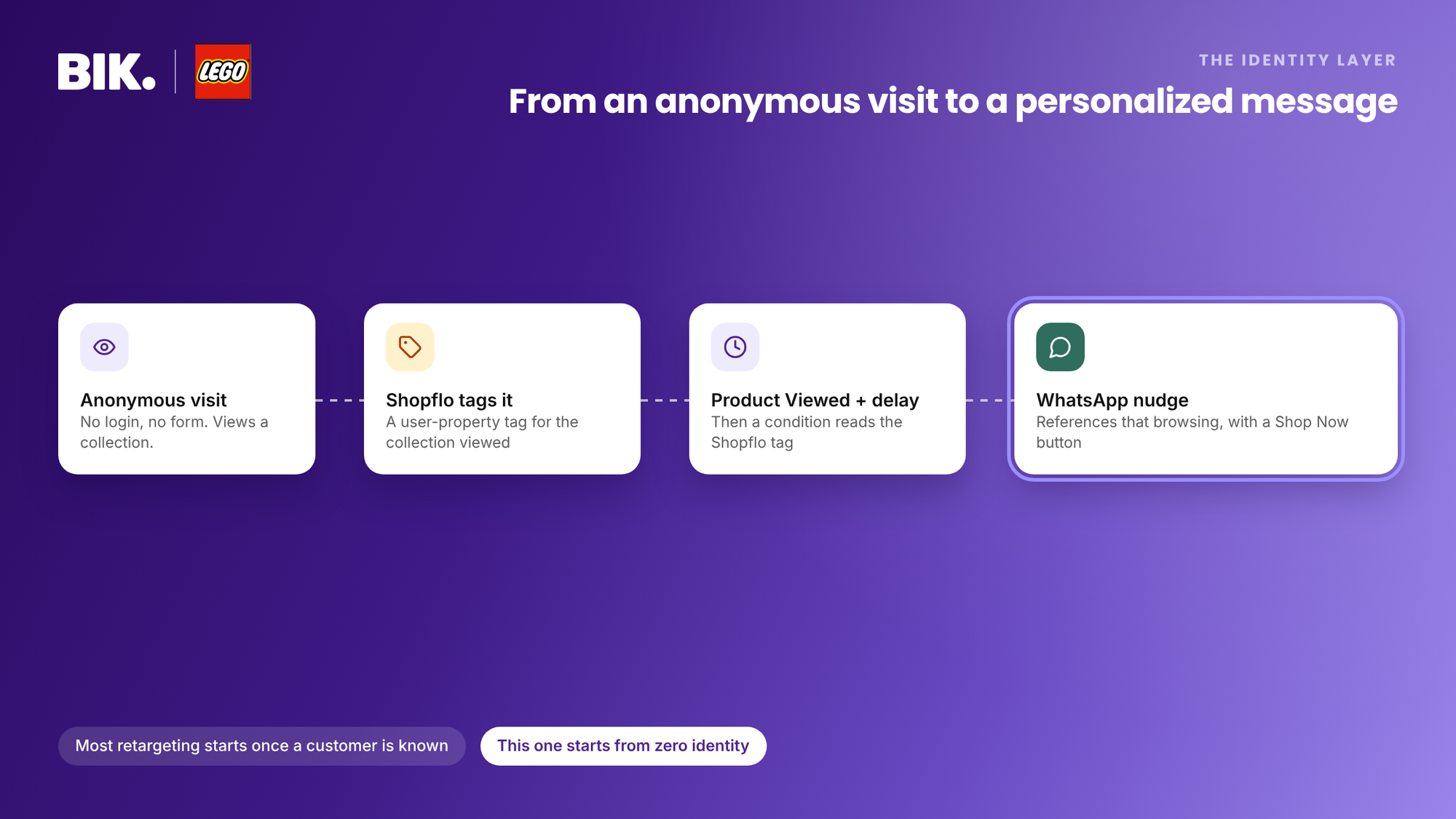
Lego closed part of that gap using Shopflo, which tags anonymous site visitors based on the product collections they view, even before any identifying information exists. BIK's flow reads that tag. When a Product Viewed event comes in, a delay runs, then a condition checks the Shopflo user-property tag for the collection the visitor was browsing and sends a WhatsApp nudge that references that browsing, with a Shop Now button.
There's a second branch worth highlighting. Visitors tagged against an active campaign, such as Lego Hype Deal or Lego Collectors Week, receive a more specific template built around that campaign instead of the generic browse-abandonment message. It's a meaningful distinction. Someone browsing during a live hype-deal window is a different kind of prospect from someone browsing on an ordinary Tuesday, and the message reflects that.
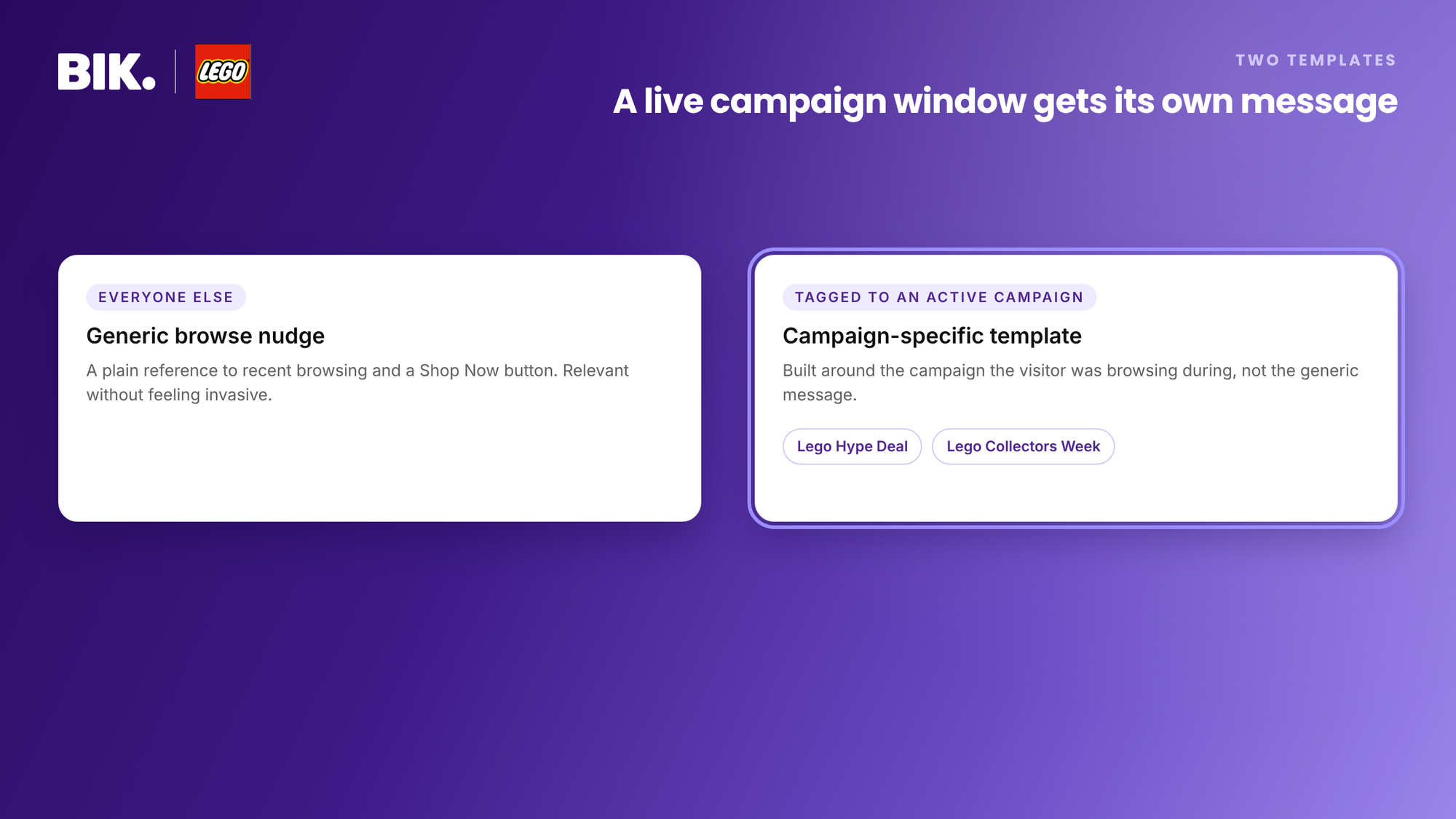
The generic template is deliberately simple: a reference to the customer's recent browsing and a Shop Now button, nothing more. That restraint matters more here than it would in a warmer flow. The recipient was anonymous a moment ago and is now receiving a WhatsApp message about their exact browsing behavior. Making that message specific enough to feel relevant, without being so specific it feels invasive, is a real design challenge, and keeping the copy plain is part of how Lego handles it.
Over 30 days, this flow drove ₹3.85L in order revenue across 9.2K triggers, reaching 1.6K unique customers. The ratio of triggers to customers is notable in itself. At roughly 5.75 triggers per customer over the month, that suggests the flow keeps re-engaging the same browsers as they return to the site.
What's genuinely new here, compared with a standard cart or browse abandonment flow, is the identity layer underneath. Most retargeting depends on a customer already being known, through an account, an email capture or a previous purchase. This flow starts from zero identity and arrives at a personalized WhatsApp message using only behavioral tagging on an anonymous visit. If your own retargeting only begins once someone has shared their details, that starting point is the part to study.
See how this would work on your store
If you want to build a flow like this for your own store, book a meeting with the Manifest AI team and we will walk you through it in a live demo.
