
.png)
How Popclub encourages members to spend their loyalty points before they expire
Loyalty currency has an unusual failure mode. A customer earns points, feels good about it and then does nothing. Months later the points expire unused, and the brand has paid out a reward that never led to a second purchase. Many loyalty programs lose real money this way, quietly, without anyone ever deciding to let it happen.
Popclub, Razorpay's loyalty product, ran into this with POPcoins. Coins were expiring before customers redeemed them, and the standard fix, an email reminder, wasn't getting through. Email open rates for loyalty nudges tend to sit in the low double digits, and a coin balance about to disappear needs a channel people actually check.
What makes Popclub's setup interesting is less the switch of channel and more how BIK fits alongside a stack that was already in place. Popclub runs its segment-based distribution and drip campaigns through MoEngage, and there was no appetite to replace it. So BIK sits upstream of MoEngage rather than taking its place. BIK builds the WhatsApp templates that carry the expiry reminder, and those templates are handed to MoEngage, which decides who receives what, and when.
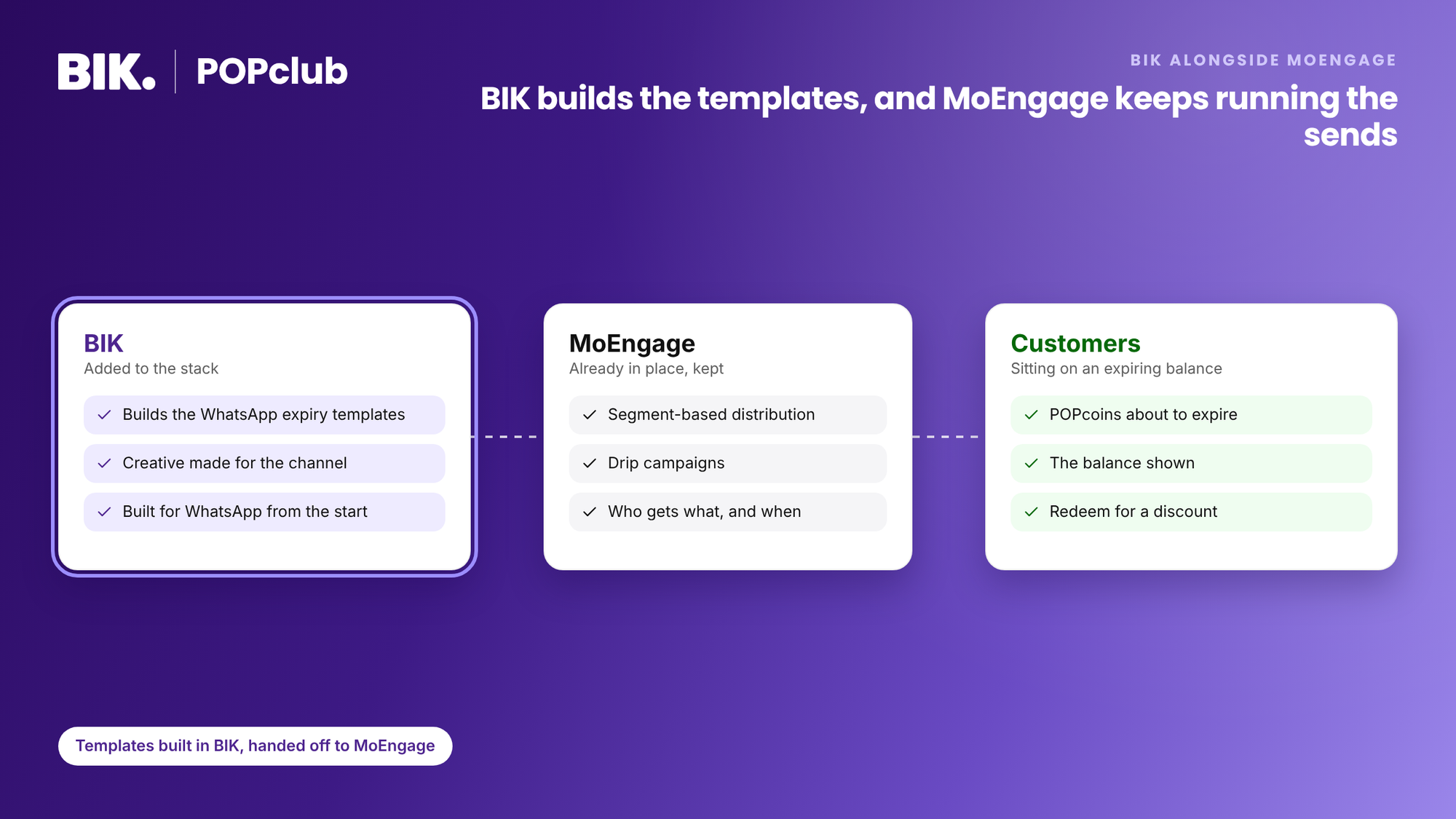
That's a more realistic picture of how most martech stacks work than many case studies admit. Brands rarely swap out an entire stack for one new tool. They add a piece that does one job better and connect it to what's already running. Here, BIK's contribution is WhatsApp creative designed for the channel, rather than an email template squeezed into a new format, while MoEngage keeps ownership of segmentation and send scheduling.
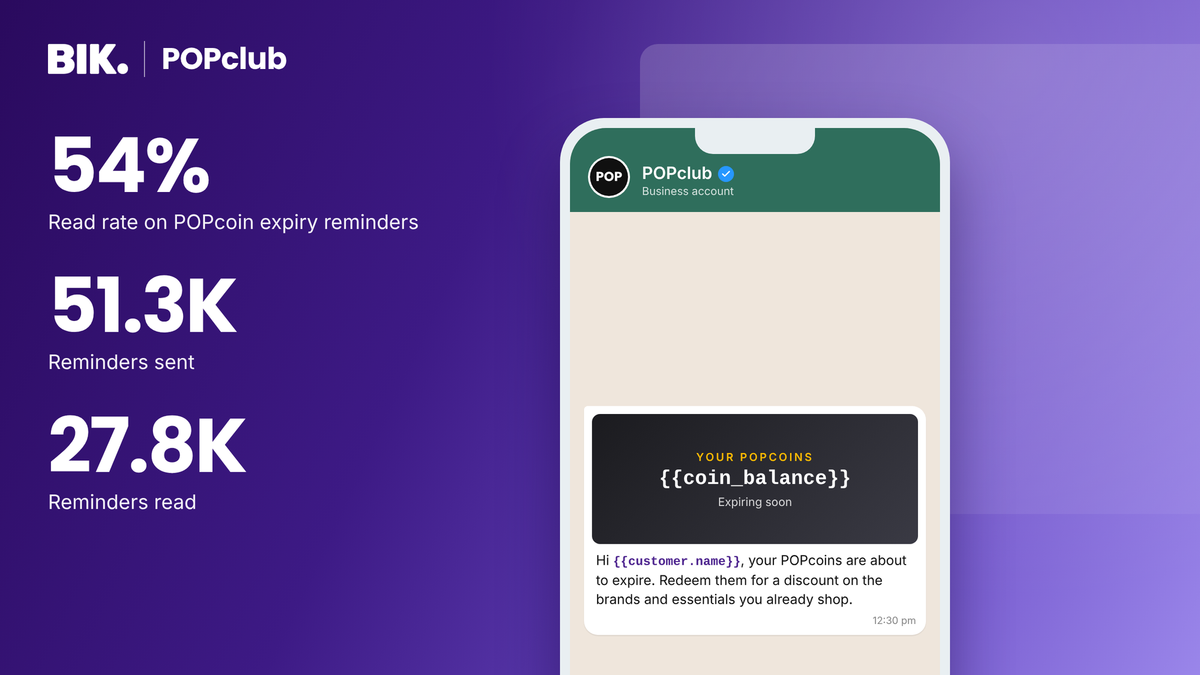
The reminder itself is direct: your POPcoins are about to expire, here's your balance, and you can redeem them for a discount on brands and essentials you'd buy anyway. There's no elaborate flow or multi-step capture. It's a well-timed nudge on a channel where it's likely to be seen, driven by data MoEngage already holds about who has an expiring balance.
Over the measurement window, 51.3K reminders went out and 27.8K were read, a 54% read rate. That's high for a transactional-adjacent nudge, and it's consistent with what you'd expect from WhatsApp compared with email for this kind of message. People don't ignore their WhatsApp the way they ignore a loyalty newsletter.
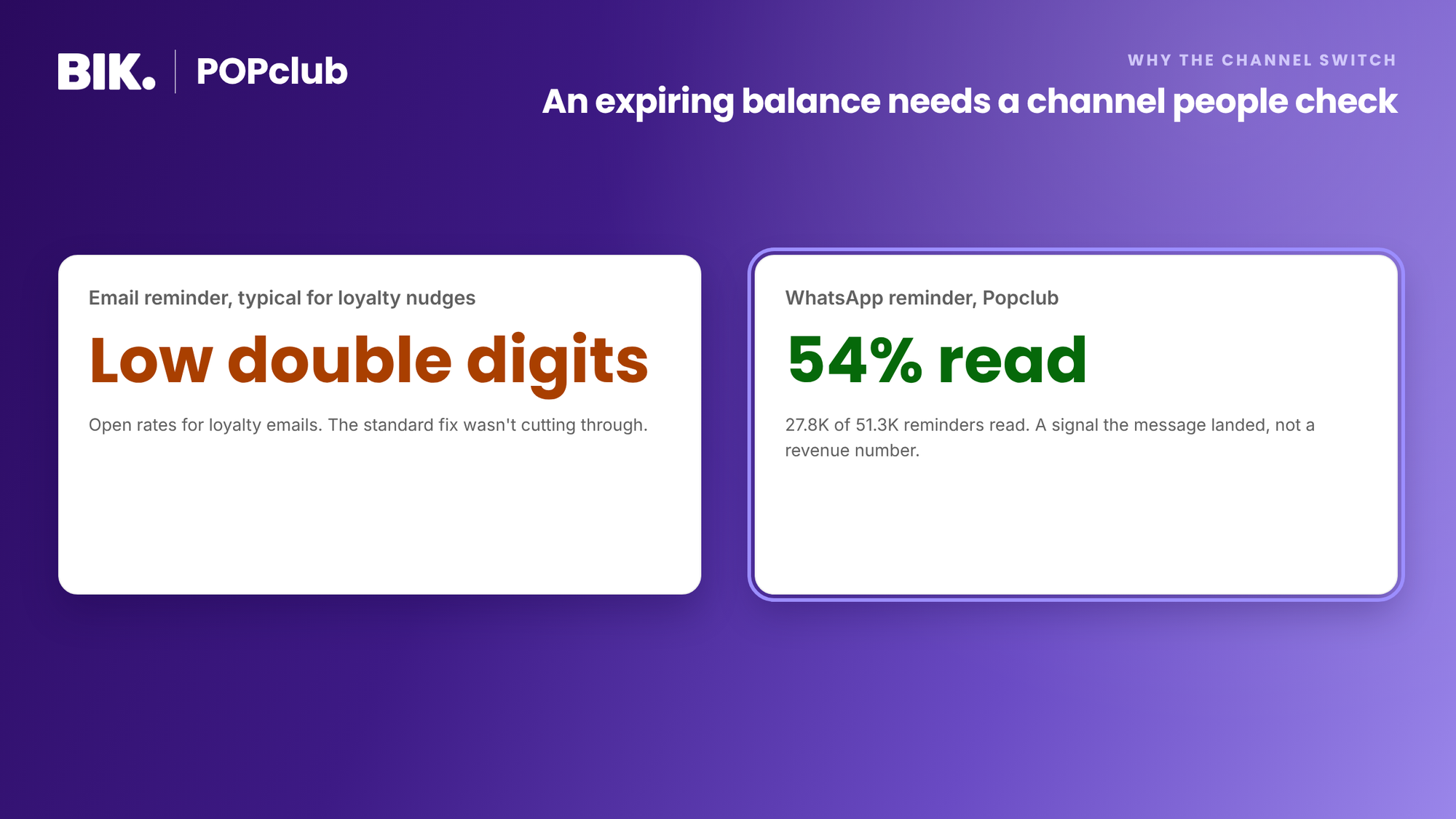
What this doesn't show is how many of those reads became redemptions. Popclub's own reporting can answer that better than a read rate can, and it's better to be clear about the gap than to imply the metric proves more than it does. A 54% read rate is a real, useful sign that the message landed. It isn't a revenue number, and presenting it as one would be misleading.
If you run a loyalty program with an expiry mechanic and a martech stack you'd rather keep, the takeaway is narrower than simply switching to WhatsApp. The format of the reminder matters as much as the channel, and a tool that's good at building for one channel can fit inside a stack that already handles everything else, without asking you to replace it.
See how this would work on your store
If you want to build a flow like this for your own store, book a meeting with the Manifest AI team and we will walk you through it in a live demo.
