
.png)
Lego built a WhatsApp gift quiz for people who don't know Lego
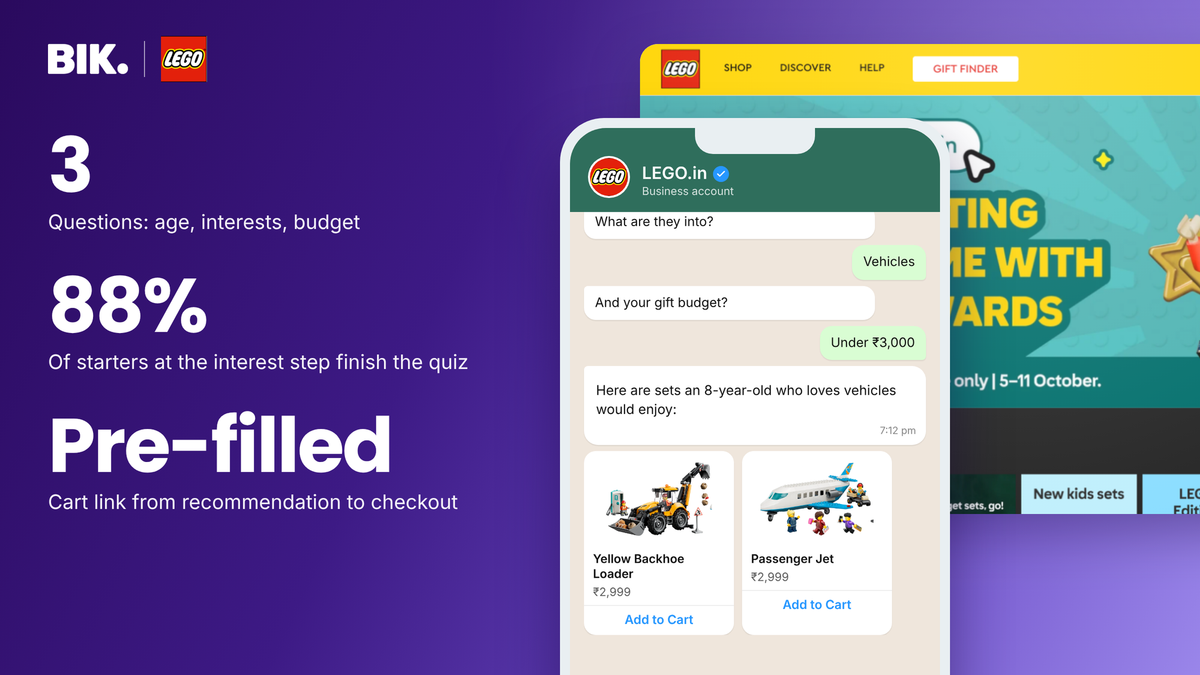
Buying a Lego set as a gift is harder than it looks if you aren't already a Lego person. The catalog is enormous, spread across age ranges, themes and price points that aren't always obvious from a product name. A grandparent shopping for an 8-year-old grandchild they don't see often is exactly the kind of shopper who opens the website, feels overwhelmed and closes the tab without buying.
Lego built a conversational gift-finder quiz on WhatsApp for that shopper. It asks three questions in turn: the recipient's age, their interests, and the gift budget. Nothing about the format assumes the person already knows the Lego catalog. It's designed for someone who wants to be guided through a decision, as opposed to someone confidently browsing on their own.
Once the flow has those three answers, an AI agent generates a shortlist of matching sets and sends them back as a Recommended Products carousel, with a pre-filled cart link on mybrickhouse.com. The shopper can go straight from a recommendation to checkout without searching for the product again. That last step matters more than it might appear. A recommendation that sends the shopper off to find and add the product manually loses people at precisely the moment they were most convinced.
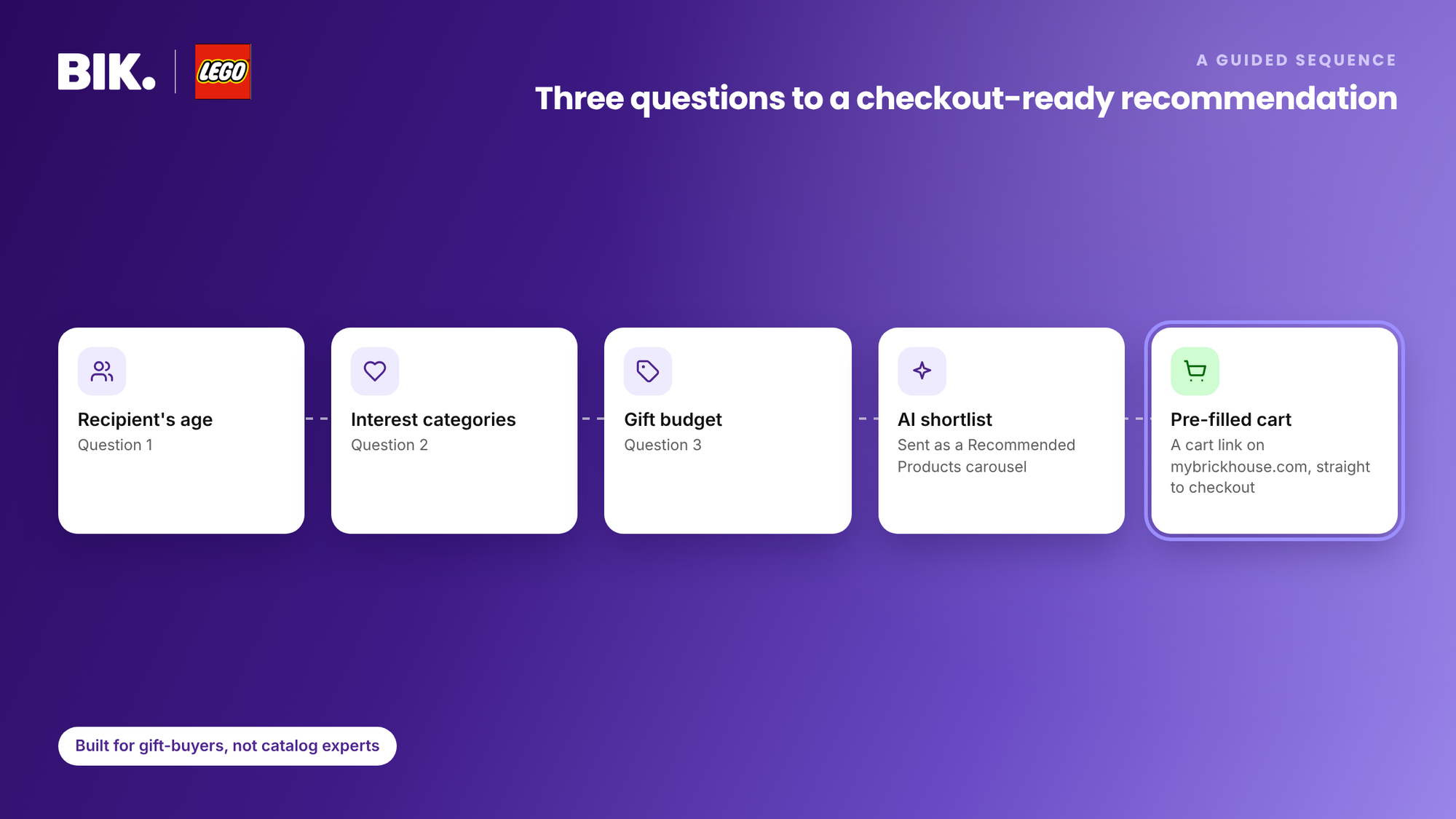
It's worth noting who this flow is built for. It isn't aimed at Lego's core, catalog-savvy audience, the people who already know which theme and set number they want. It's aimed at the edge of the customer base: gift buyers who are one confusing catalog page away from giving up and buying something else. That's a different job from what most product-discovery tools are designed for, and it explains why the flow is a guided sequence rather than an open search or browsing experience.
The metric Lego tracks reflects that framing: 88% of quiz starters who reach the interest step go on to complete the flow and receive an AI recommendation. That's a completion metric rather than a purchase metric, and the distinction is important. It shows the quiz doesn't lose people partway through, which is where most guided-discovery flows fall down. Multi-step flows tend to lose people with every added question, so an 88% completion rate from the interest step onward suggests the sequence is short and clear enough that most people who start it finish it.
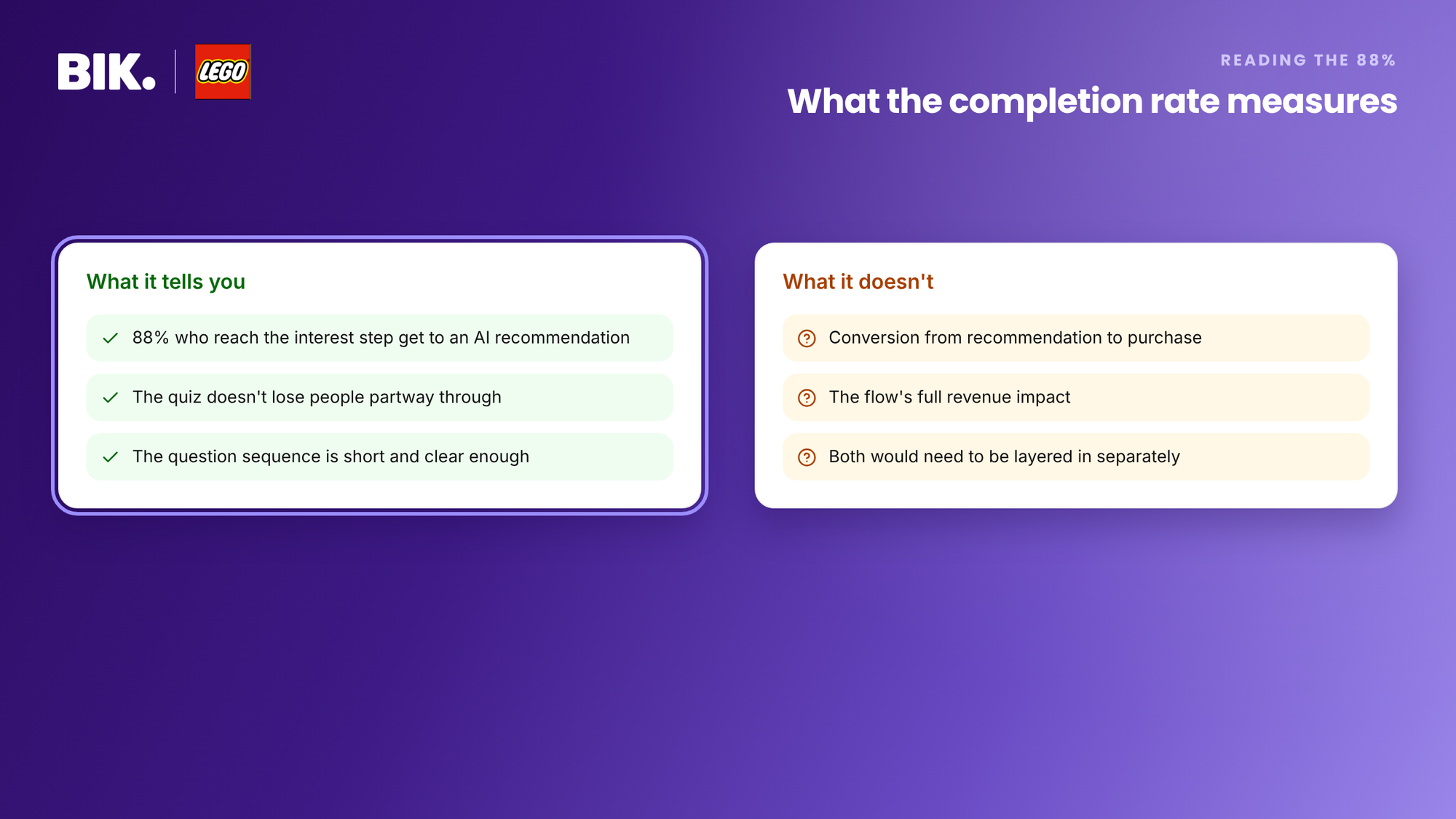
What it doesn't measure is conversion from recommendation to purchase, which would need to be added separately to understand the flow's full revenue impact. As a discovery mechanism, though, it does what it was built to do: take someone who doesn't know where to begin and lead them to a specific, purchasable recommendation in three questions.
If you sell a catalog that's hard for a non-expert to navigate, especially around gifting occasions, this format is worth adopting. A short, guided set of questions that ends in a specific, checkout-ready recommendation instead of another search bar.
See how this would work on your store
If you want to build a flow like this for your own store, book a meeting with the Manifest AI team and we will walk you through it in a live demo.
