
.png)
Lego collects reviews on WhatsApp, but a person sees the low ratings first
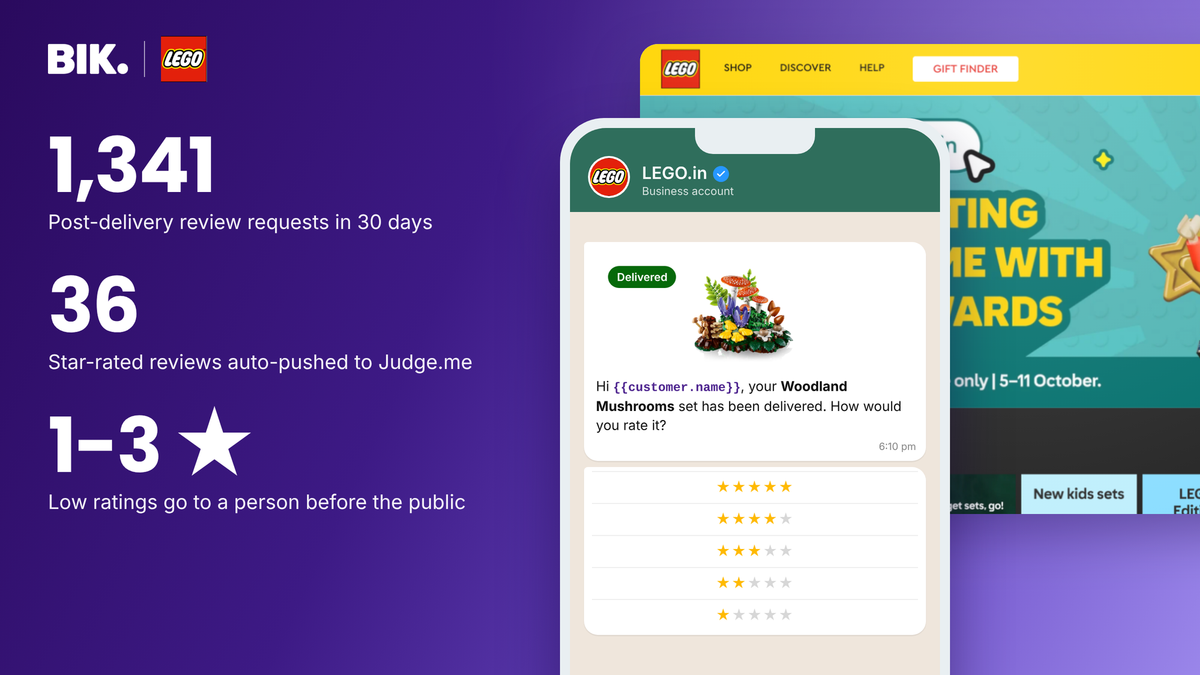
Review collection has a built-in tension that most flows never resolve. Brands want more reviews, because reviews build trust and drive conversion on product pages. But brands also don't want an unhappy customer's first, unfiltered frustration landing publicly on that same page before anyone has had a chance to fix the problem.
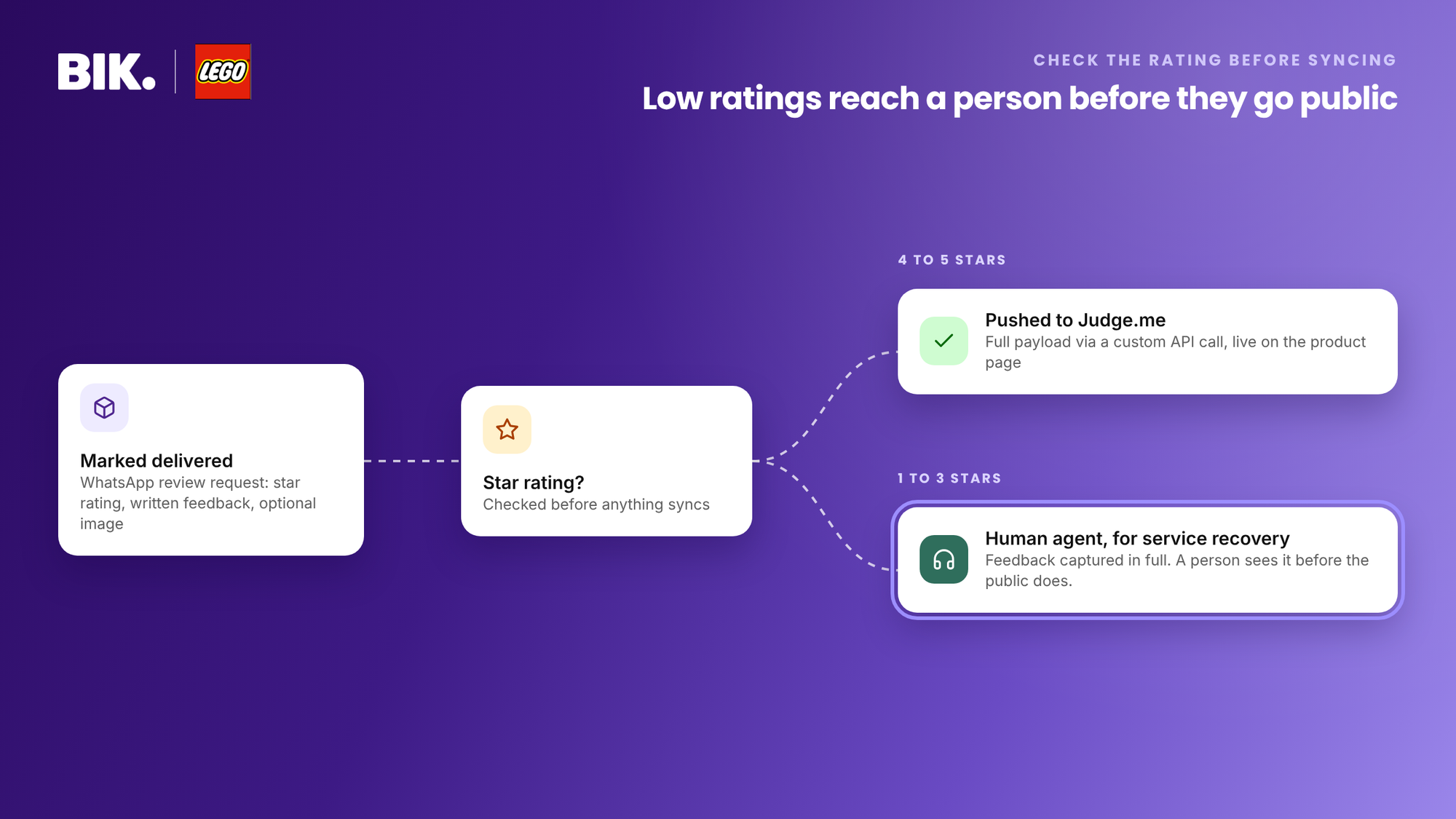
Lego's flow, built on BIK with a Judge.me sync, deliberately handles both sides. When a product is marked delivered, the flow sends a WhatsApp review request. The customer picks a star rating from a list, adds written feedback and can attach an optional image. The full review is pushed to Judge.me automatically through a custom API call, so it appears on the product page without anyone copying it across by hand.
The part that resolves the tension is a conditional branch that checks the star rating before syncing. Ratings of 1 to 3 stars don't go straight to public Judge.me sync. They go to a human agent for service recovery instead. The customer's feedback is still captured in full, with the same detail a 5-star review would carry. It simply reaches a person before it reaches a product page, giving the brand a chance to fix whatever went wrong before that experience becomes the first thing a new shopper reads.
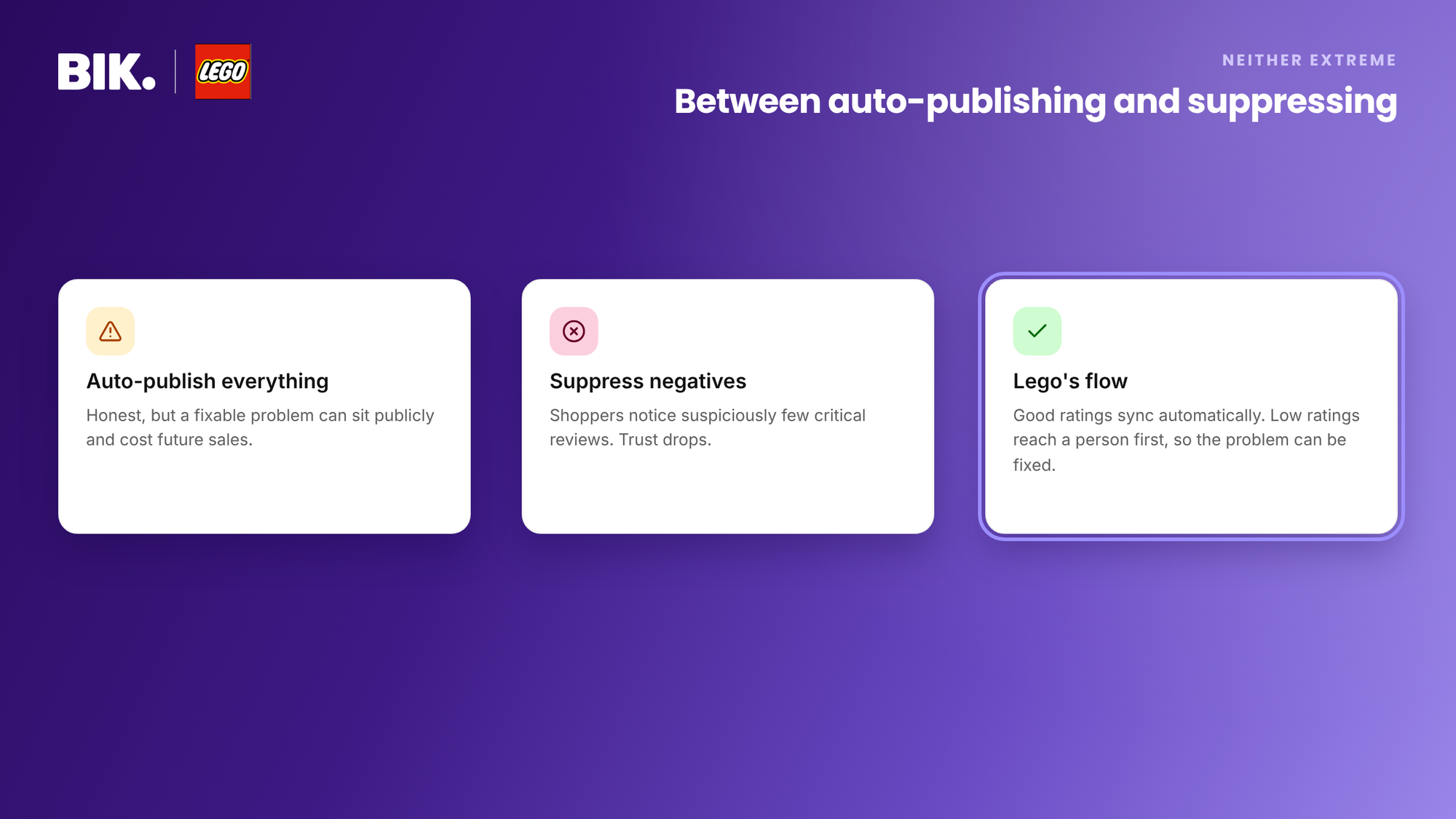
This sits between two extremes. Auto-publishing every review, whatever the rating, is honest, but it can leave a fixable problem visible publicly and cost sales that didn't need to be lost. Suppressing negative reviews altogether fails in the opposite direction: customers notice when a product page has suspiciously few critical reviews, and that damages trust more than a handful of visible 3-star ratings would. Lego's flow does neither. Low ratings still produce a real signal, and a person sees it before the public does.
In 30 days, 1,341 post-delivery requests went out, and 36 star-rated reviews were captured automatically and pushed to Judge.me. That's a small share of total requests, and it's fair to say so. It's also normal for review collection, since most customers don't respond to review requests regardless of channel or brand. What the number doesn't show is how many of those 1,341 requests led to a private, low-star response that went to service recovery rather than the public count. That's arguably the more valuable output of this flow, and also the hardest to measure publicly, since those responses are designed not to be visible.
If your post-purchase review collection treats every rating the same way, consider splitting it: let the good reviews sync automatically, and route the low ones to a person before they go live.
See how this would work on your store
If you want to build a flow like this for your own store, book a meeting with the Manifest AI team and we will walk you through it in a live demo.
