
.png)
Lego turned its order confirmation into a payment recovery tool
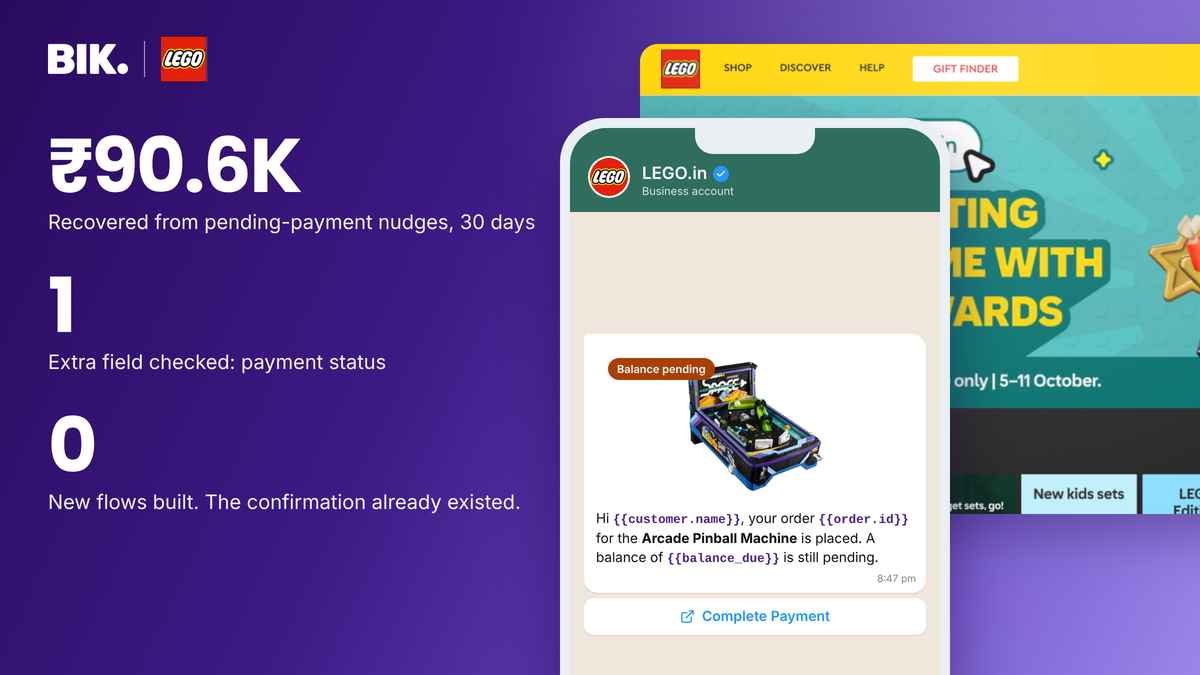
An order confirmation is usually the least interesting message a brand sends. It's essentially a receipt: thanks for your order, here's what happens next. Most brands treat it as a formality, because for most orders, that's all it is.
Lego's Shopify store has one category of order where that isn't true: pre-orders and partial payments, where a customer pays a deposit and owes the balance later. For those orders, a generic "thanks for your order" confirmation is actually wrong. It implies the transaction is complete when it isn't, and it spends the one moment a brand is guaranteed the customer's attention, right after they've interacted with the store, on a message that asks for nothing.
Lego's flow checks the payment status before deciding what to send. Fully paid orders receive the confirmation you'd expect, with an Order Status button. Orders with a pending balance receive a payment reminder with a Complete Payment button instead, at the same moment another brand would be sending a receipt that needs no action.
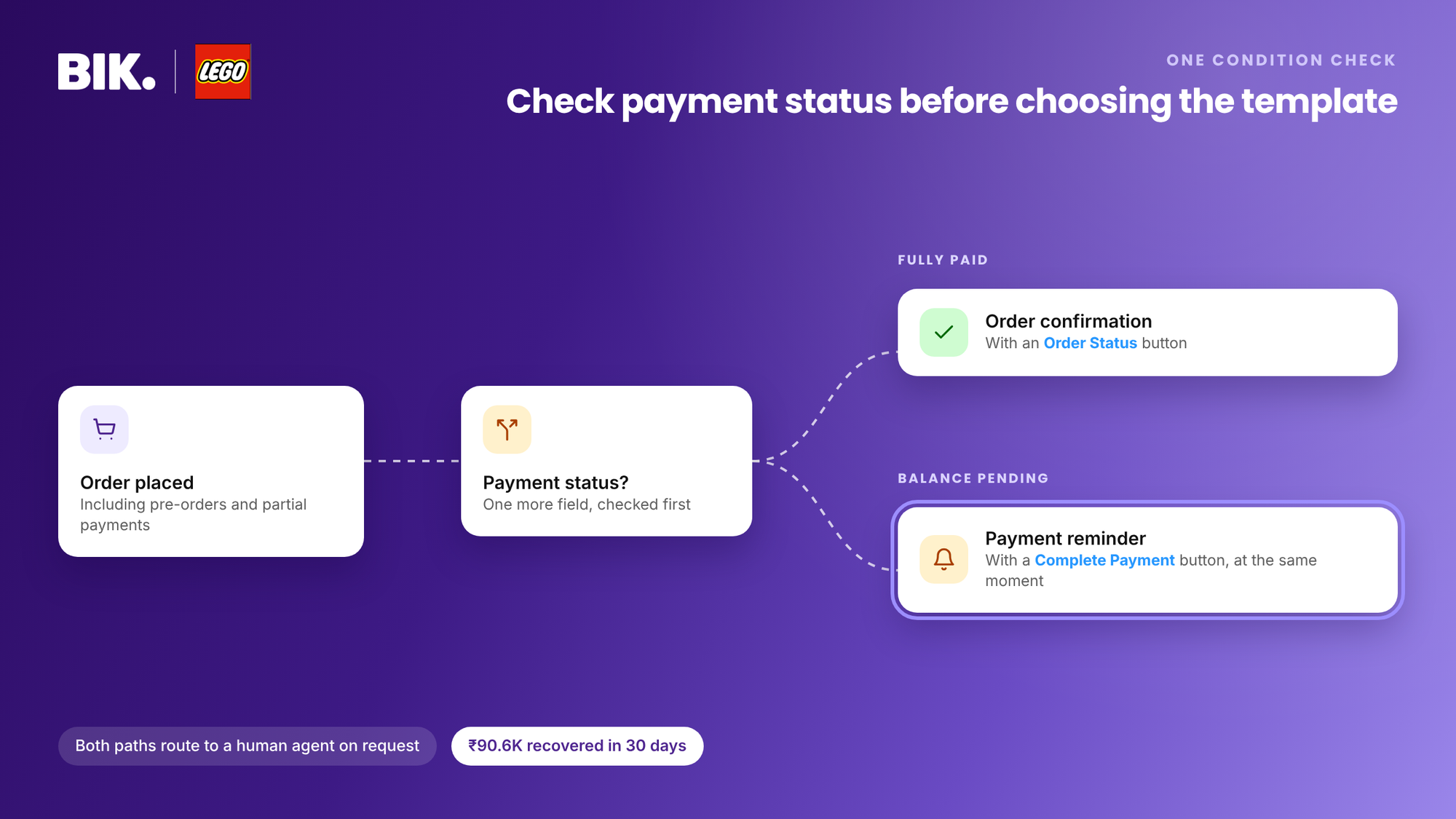
That's the entire mechanism. It may seem almost too simple to write about, which is part of why it's worth writing about. Lego didn't need new infrastructure or a new channel. The order confirmation flow already existed, and the only change was checking one more field, payment status, before choosing which template to send. Both paths route to a human agent if the customer asks for one, so nobody ends up stuck in an automated dead end.
In 30 days, the flow recovered ₹90.6K through pending-payment nudges. That revenue was, technically, already committed: the customer had placed the order and paid a deposit. It just hadn't been collected, and without a nudge at the right moment, some of those balances tend to stay unpaid indefinitely. Chasing them afterwards through a separate collections process is slower, and more likely to lose the sale once the original purchase moment has cooled.
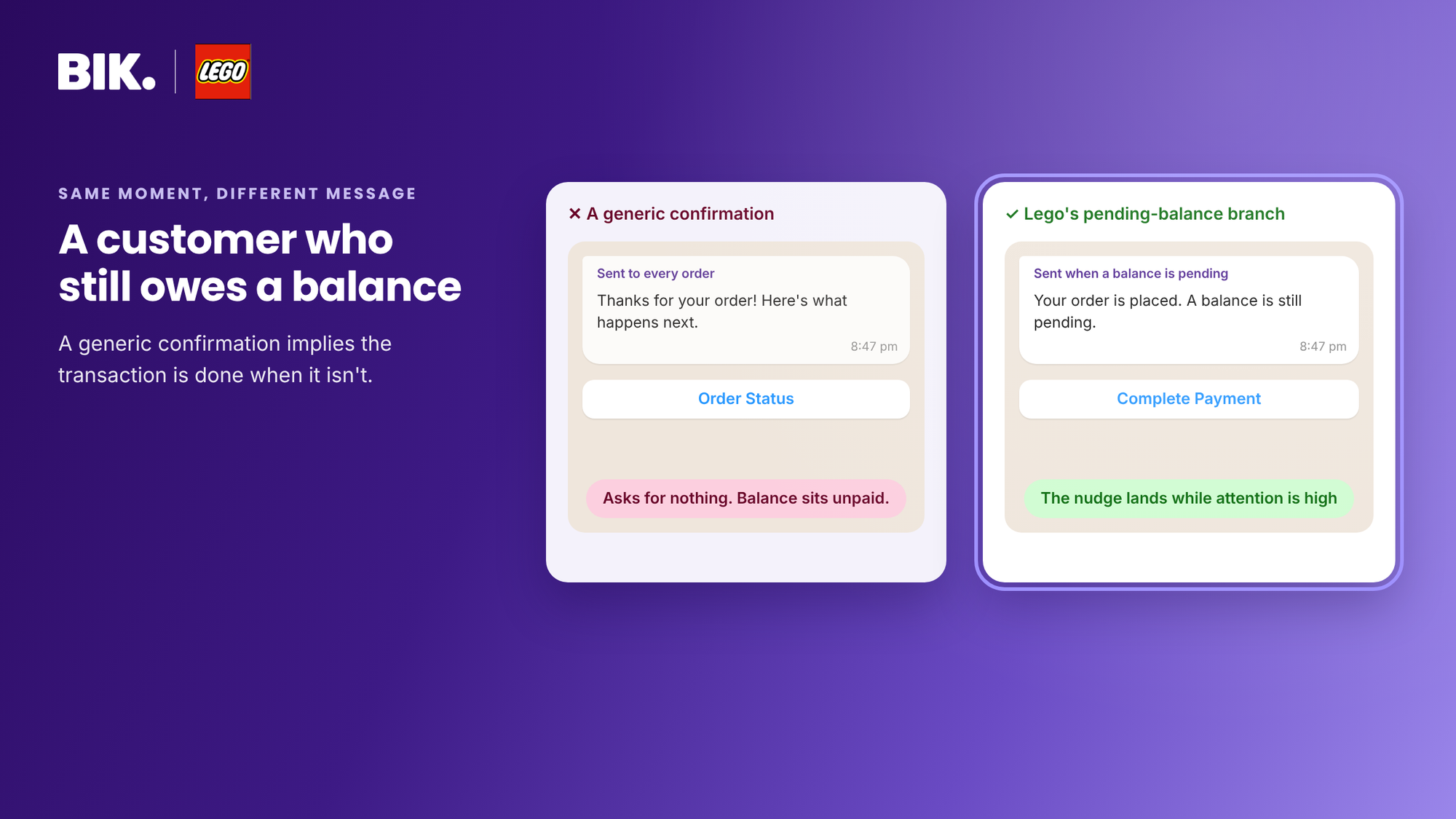
The broader lesson goes beyond balance payments. It's a habit: look at a message you already send to everyone and ask whether it says the right thing to every recipient. Lego's order confirmation was correct for most customers and wrong for one segment with unpaid balances. The fix wasn't a new flow, just one condition inside the flow that already existed.
If your store runs any kind of deposit, pre-order or partial-payment model, compare this with your own confirmation message. If it says "thanks for your order" to someone who still owes you money, that gap is costing revenue quietly, one unpaid balance at a time, without ever showing up as an obvious problem on a dashboard.
See how this would work on your store
If you want to build a flow like this for your own store, book a meeting with the Manifest AI team and we will walk you through it in a live demo.
