
.png)
Lego's post-purchase cross-sell flow on WhatsApp
If you run a Shopify store, this pattern will probably be familiar. You've already invested in product recommendations, perhaps through Shopify's Search & Discovery app or through a merchandising team that spent real time deciding what goes with what. That data sits on your product pages, quietly working while people browse.
Then they buy, and the recommendations stop.
Lego ran into exactly that gap on its India Shopify store. The Complementary Products mapping in Search & Discovery was solid, designed to nudge browsers toward a bundle before checkout. Once checkout happened, though, none of that intelligence carried forward. The next thing a customer heard from Lego was a shipping update, and perhaps a review request a few weeks later. Nothing suggested what usually goes with what they had just bought.
For a toy brand, that's a meaningful miss. Parents rarely buy Lego only once. There's a missing piece to replace, a follow-up set the child has been asking for, or a small gift for a sibling. The intent to buy again often exists in the first couple of weeks after a purchase. The question was whether Lego could reach that intent before it faded, using data it already owned.
Building it on WhatsApp instead of email
Lego chose WhatsApp for the follow-up, and that choice matters more than it might seem. Post-purchase email open rates for most D2C brands are low, often under 20%. WhatsApp, used well, gets read.
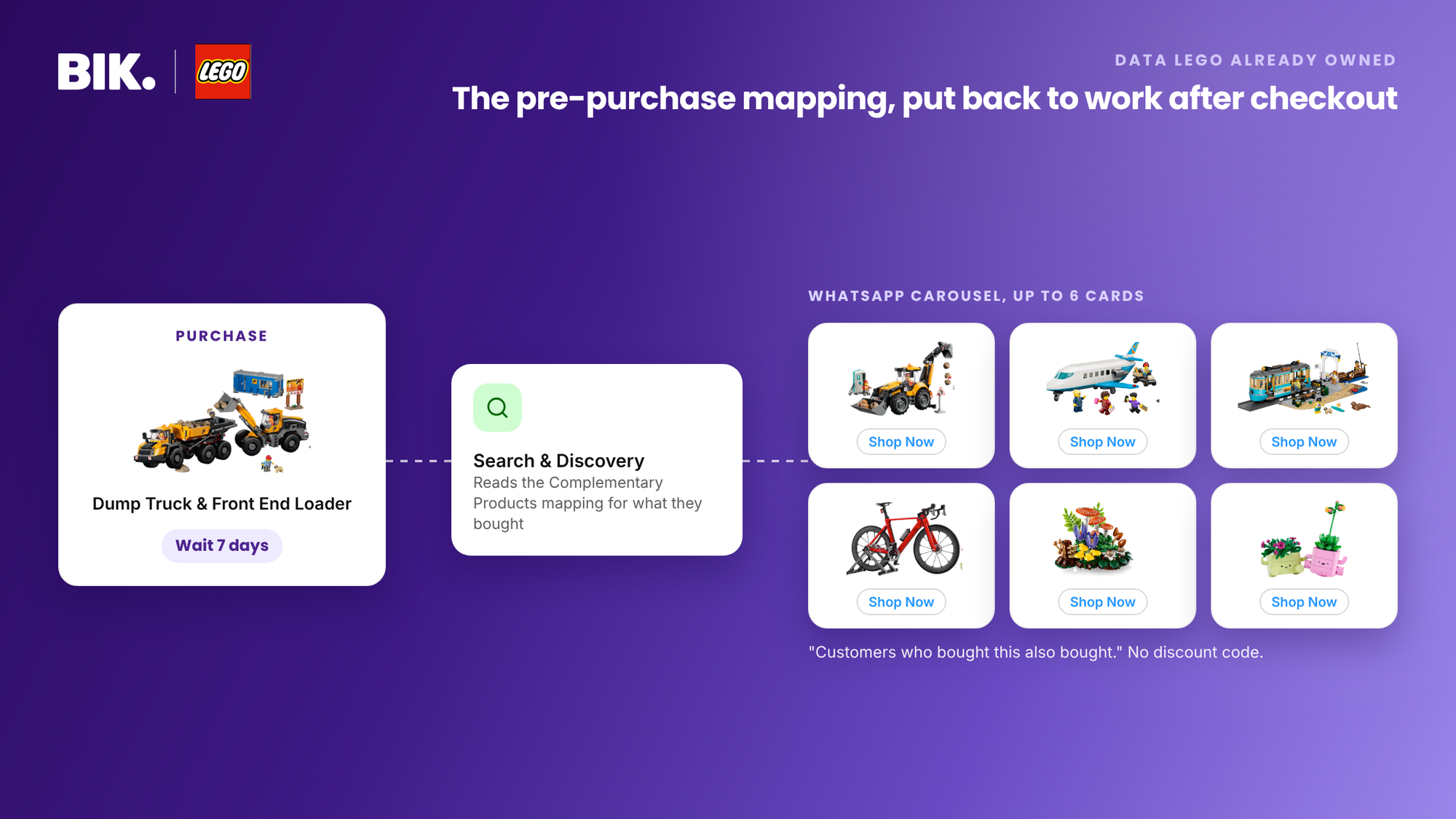
The flow, built on BIK, triggers seven days after any purchase. The timing is intentional. Any sooner and it reads as an upsell before the first order has arrived. Any later and the moment has passed. Seven days lets the first purchase land while the appetite for a second is still there.
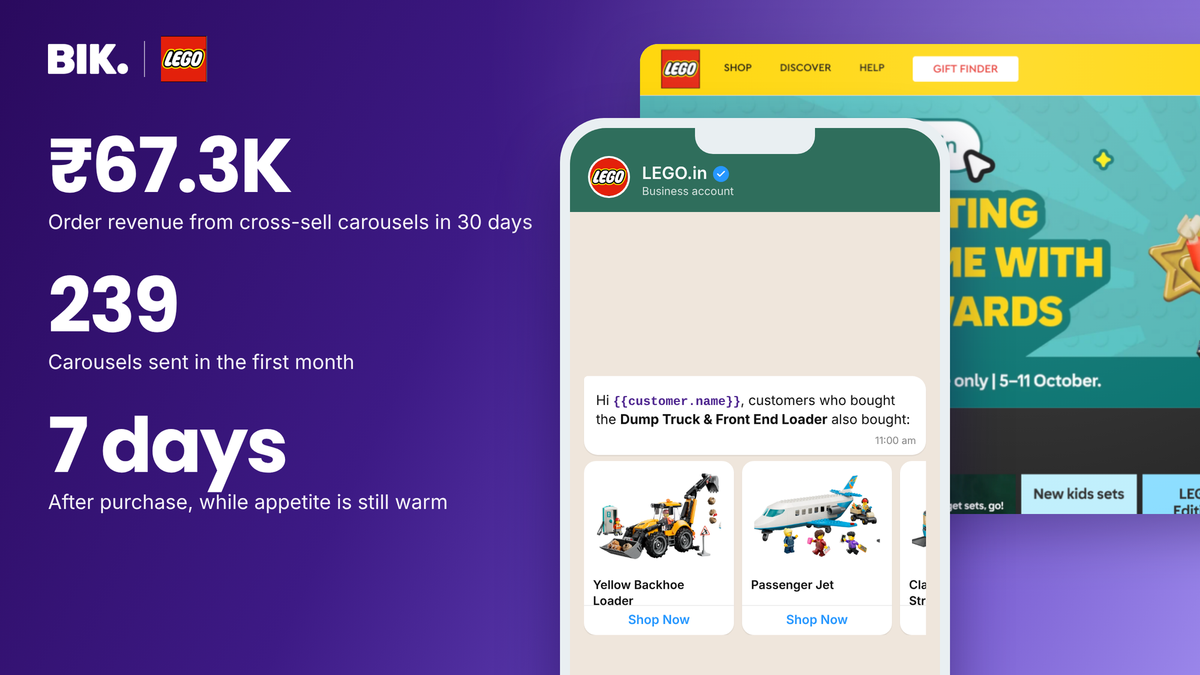
Once triggered, the flow reads the Shopify Search & Discovery mapping for what the customer bought and pulls up to six complementary products. These go out as a WhatsApp carousel of individual branded cards, each with its own Shop Now button. The framing is plain and familiar, "customers who bought this also bought," with no hard sell and no discount code at the top. It's the same kind of recommendation the customer would have seen before buying, shown again when it's most useful.
The rule that keeps it from becoming spam
The detail that's easiest to skim past is the one that matters most: a per-user frequency cap.
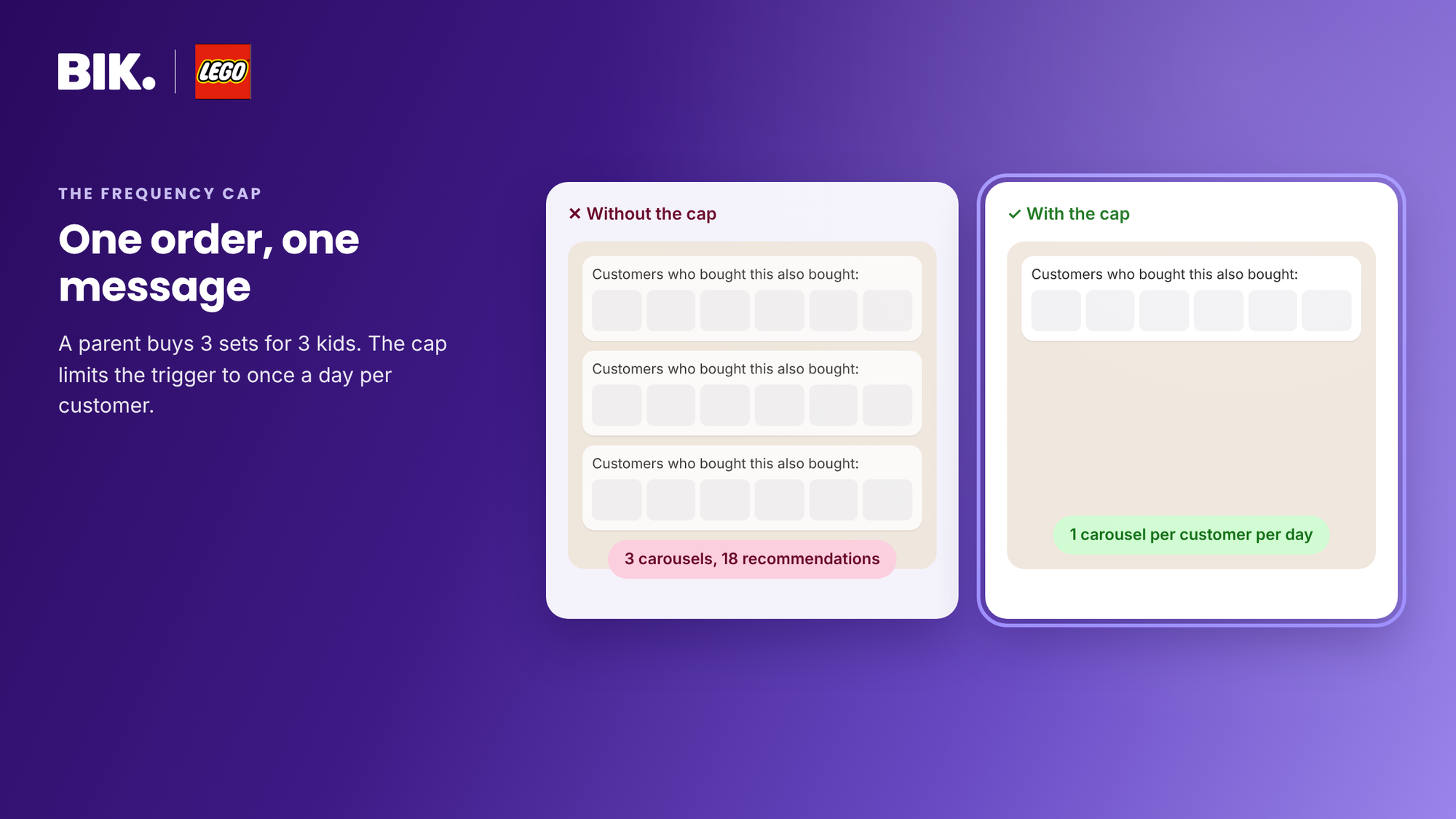
Imagine a parent buying three Lego sets in one order, for three different children. Without a cap, that single order would trigger three separate carousels, each with six recommendations, all arriving on WhatsApp at the same time. At that point it's no longer a helpful nudge. It's noise, and the kind of noise that gets a brand muted or reported.
The cap limits the trigger to once a day per customer, so three items in one order means one carousel. It's a small rule on paper. In practice, it separates a flow customers tolerate from one they block.
What happened after 30 days
239 carousels went out in the first month, and BIK attributes ₹67.3K in order revenue to those sends.
Cart recovery on the same Lego account drove considerably more revenue over the same period, which is expected given the different trigger, volume and problem. A cross-sell carousel sent a week after purchase was never going to outperform a flow that reaches someone mid-checkout.
What the number does show is that dormant product data, put back to work at the right moment, earns real revenue on its own. Lego had already done the hard part by mapping which products go together. That mapping went unused the moment a customer completed checkout. The flow needed no new merchandising decisions or content. It simply moved existing intelligence to a new moment, after the sale, on a channel customers were already checking.
If you're running something similar
If your store already has a complementary products mapping, whether through Shopify's native app or something built in-house, there's a good chance it stops working as soon as someone places an order. That gap is worth checking before you build anything new.
And if you build your own version, don't skip the frequency cap. It's the one line item that separates a useful flow from the kind of message people report a brand for sending.
See how this would work on your store
If you want to build a flow like this for your own store, book a meeting with the Manifest AI team and we will walk you through it in a live demo.
