
.png)
Sleepyhead built a store locator that ends in a booked appointment

A mattress isn't an impulse buy. Most people want to lie on one before committing, so the online part of the decision, browsing, comparing and reading reviews, usually has to end somewhere physical. The gap most brands leave open is that handoff. Online interest doesn't reliably turn into a store visit, because finding the right store and actually going are two separate hurdles, and most brands only address the first.
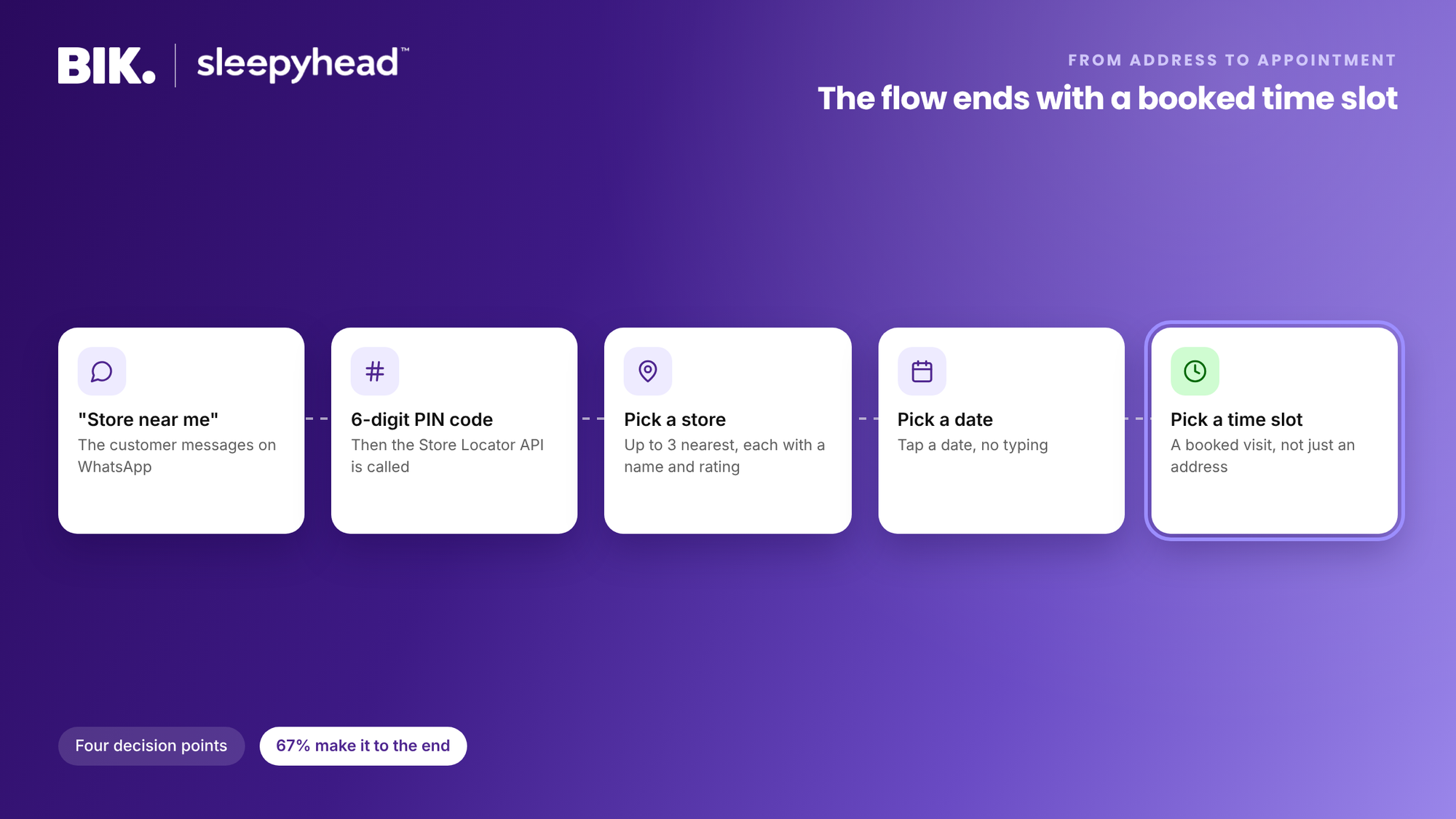
Sleepyhead's flow, built on BIK, addresses both on WhatsApp. A customer sends something like "store near me." The bot asks for a 6-digit PIN code, calls Sleepyhead's Store Locator API, and returns up to three nearby stores, each with a name and rating. So far, that's a fairly standard store locator, moved into a chat.
The flow goes further from there. The customer doesn't just receive an address. They choose a store, then a date, then a time slot. By the end of the exchange, they've booked a visit. That's a meaningfully different outcome. An address the customer has to act on later is easy to forget, while a confirmed time slot creates a small commitment that's harder to let slip.
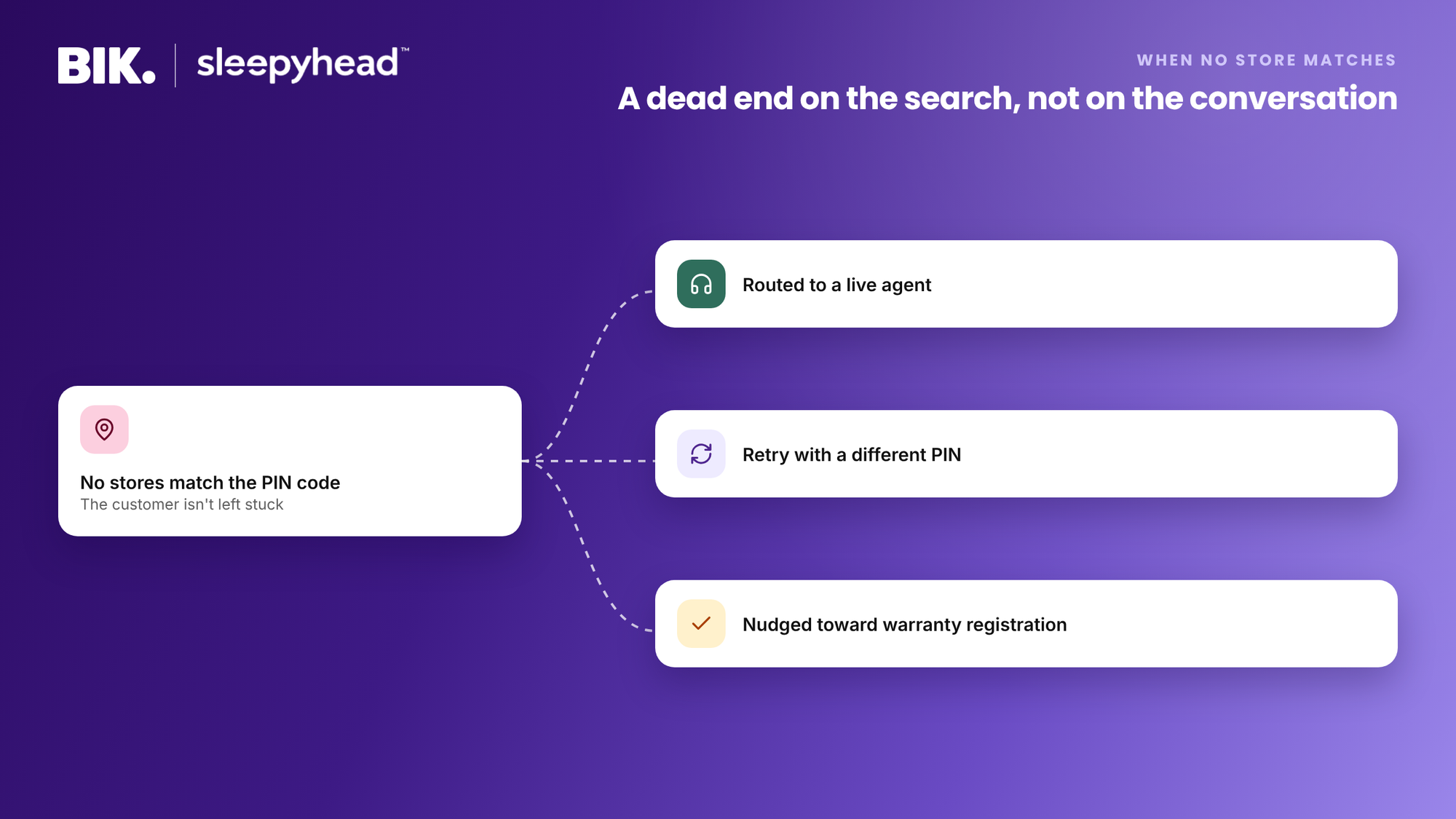
The flow also covers the case where the search comes up empty. If no stores match the PIN code entered, the customer isn't left stuck. They can be routed to a live agent, offered a retry with a different PIN, or guided toward warranty registration instead, so a dead end in the store search doesn't end the conversation.
In a month, 1,242 valid PIN codes came through, and 67% of customers who started the flow completed it with a booked visit. That completion rate is the figure to focus on. Multi-step flows on any channel tend to lose people at each step, and this one has four real decision points: enter a PIN, choose a store, pick a date, pick a time. Even so, two-thirds of the people who start make it to the end. Part of the reason is likely that every step is short and specific: a 6-digit code, a short list of nearby options, a date and a time. Nothing asks the customer to type more than a few characters or make an open-ended choice.
What the flow doesn't measure is how many booked visits became in-store sales. That gap should be acknowledged rather than glossed over: a booked appointment is a strong signal of intent, not a guarantee of revenue. Closing the loop fully would mean tying in-store POS data back to the WhatsApp booking, which is a natural next step for a flow like this rather than a flaw in what's already there.
If you sell anything that benefits from an in-person look before purchase, such as furniture or mattresses, where fit and feel matter, this approach is worth adopting. Don't stop at telling someone where to go. Help them commit to when.
See how this would work on your store
If you want to build a flow like this for your own store, book a meeting with the Manifest AI team and we will walk you through it in a live demo.
