
.png)
Sleepyhead ran a multi-round contest that never lost a participant to a failed WhatsApp message
Contests and gamified campaigns are usually built as one-offs. Someone designs the mechanic, someone builds the entry flow, the campaign runs, and most of the infrastructure is thrown away afterwards because it was built for that specific prize and creative.
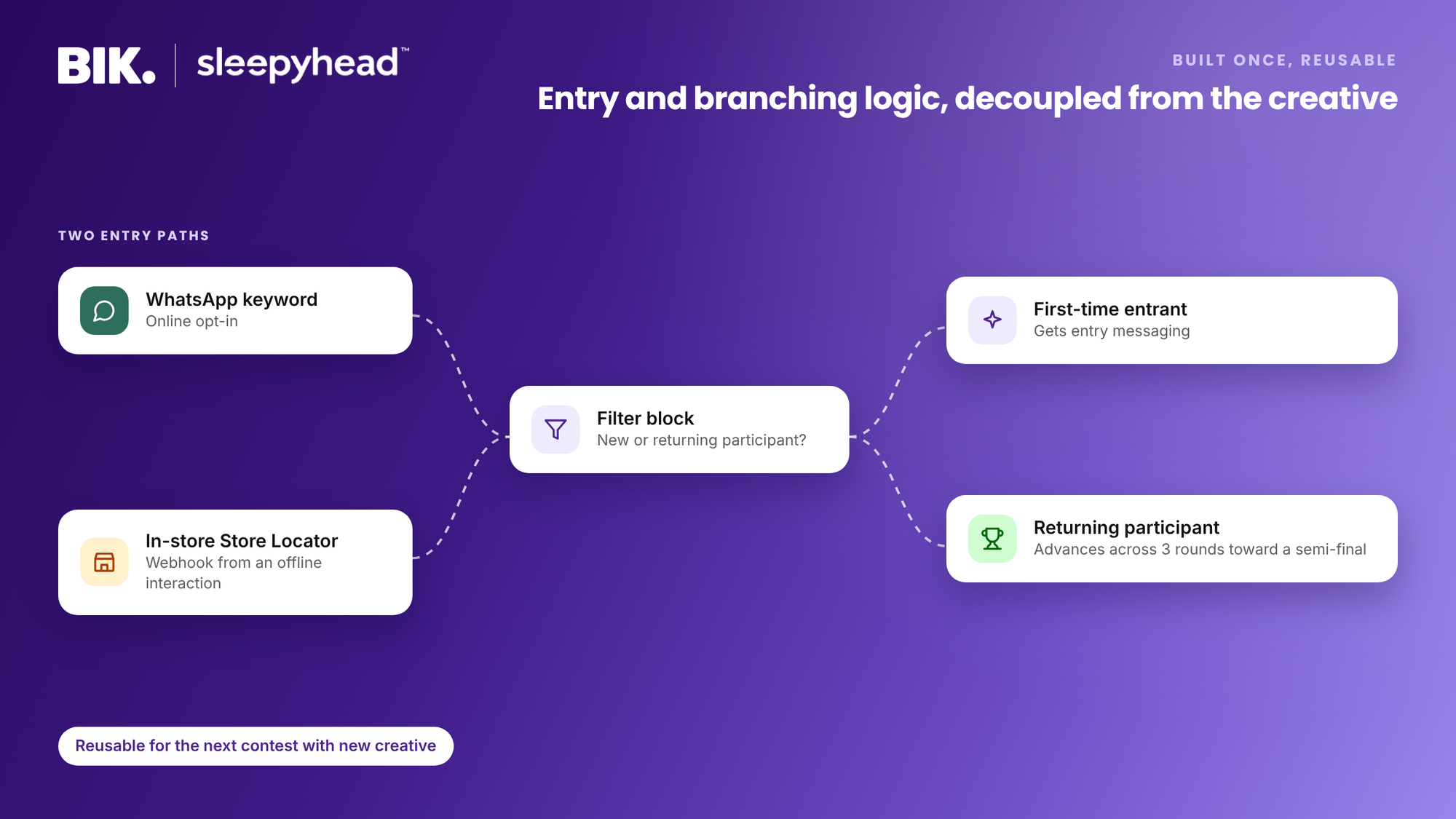
Sleepyhead's Treasure Hunt, now retired, was built differently underneath, even though it looked like a standard contest to participants. People entered through two parallel paths: a keyword-based WhatsApp opt-in, or a webhook fired from an in-store Store Locator interaction, so online and offline entries fed the same funnel. A filter block then separated new participants from returning ones, since a first-time entrant and someone advancing from an earlier round need different messages. Qualifying participants moved toward a semi-final stage across the contest's three rounds.
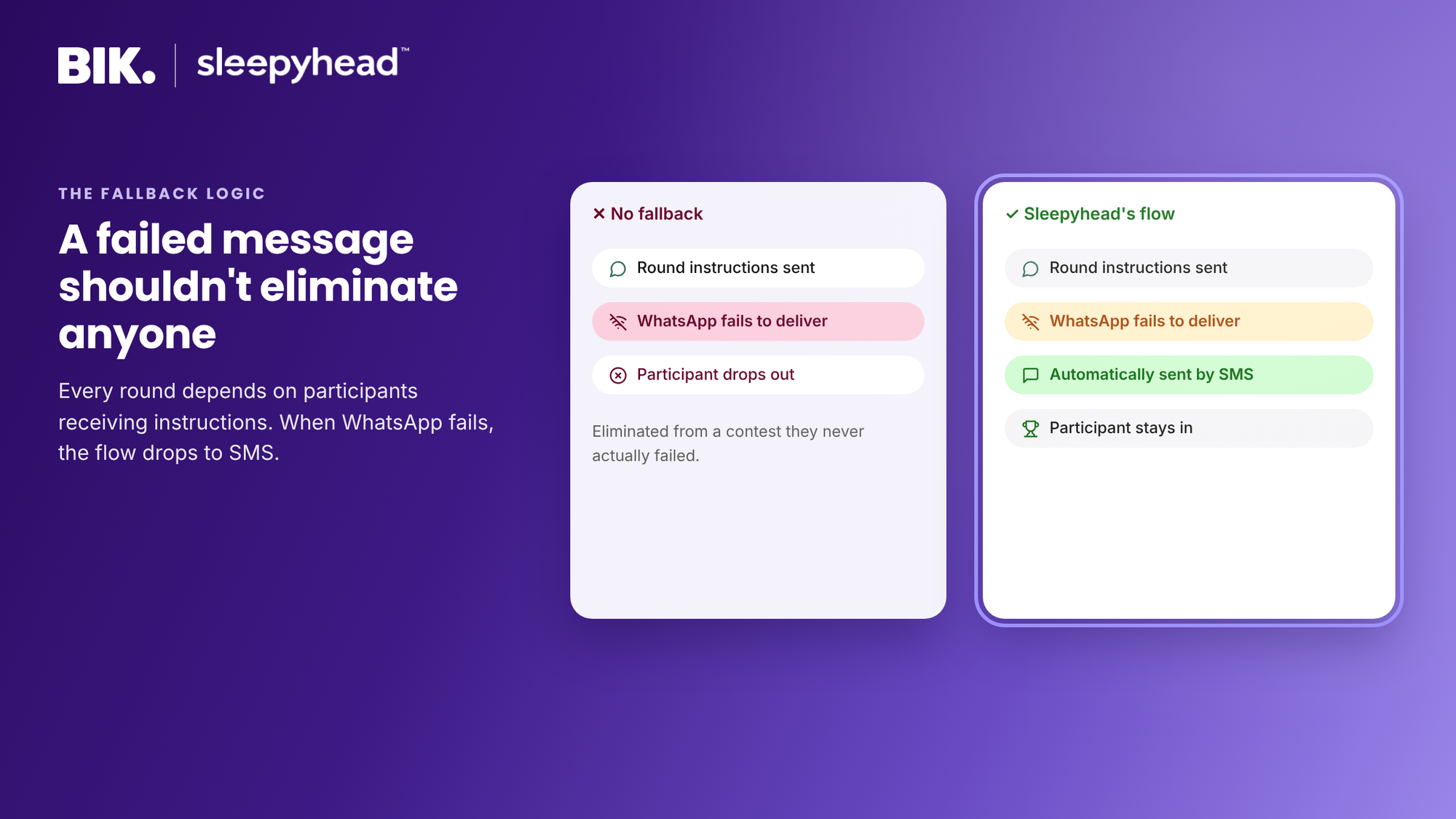
The fallback logic is the detail to focus on. Whenever a WhatsApp message failed to deliver, the flow automatically switched to SMS. That's more than a technical footnote. A multi-round contest depends on participants receiving each round's instructions in order to advance. Without a fallback, a failed WhatsApp delivery could knock someone out of a contest they never actually lost, simply because a message didn't arrive. The SMS fallback closes that gap, so a delivery problem on one channel doesn't end anyone's participation.
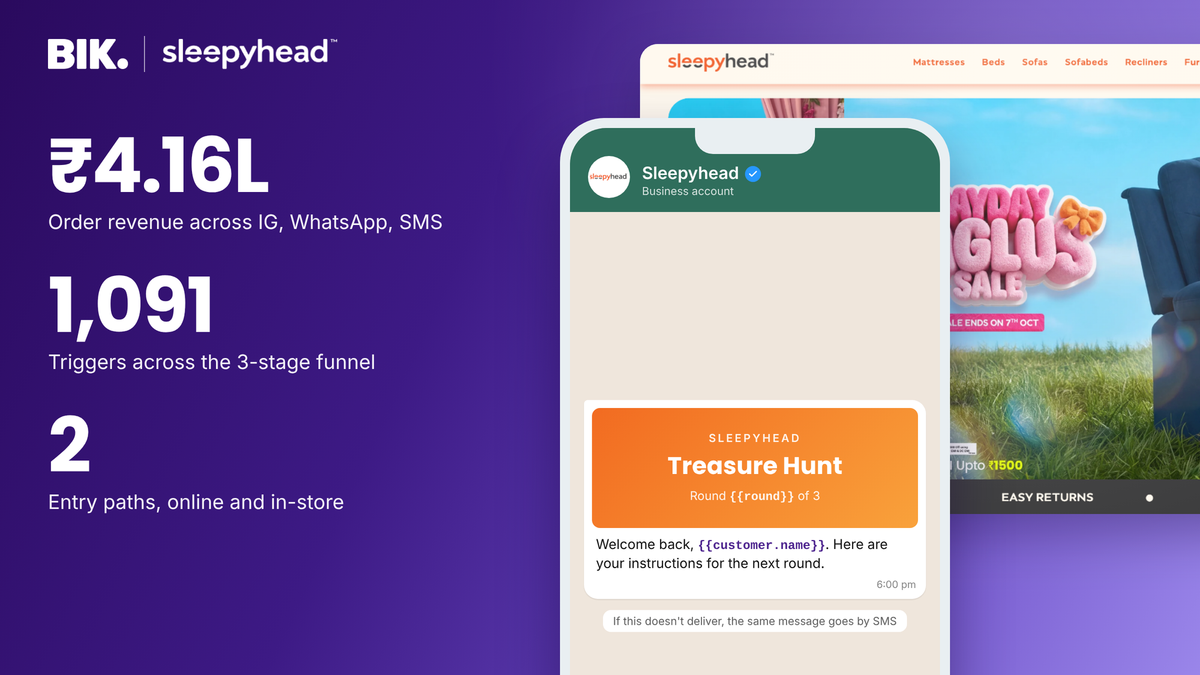
Across Instagram, WhatsApp and SMS, the contest drove ₹4.16L in order revenue, with 1,091 total triggers across the three-stage funnel. Those numbers matter less than what's reusable underneath them. Sleepyhead built the entry logic, branching logic and fallback logic once, separately from the Treasure Hunt's specific creative and prize. Change the creative and the prize structure, and the same skeleton (dual entry points, new-versus-returning branching and cross-channel fallback) can run an entirely different contest without being rebuilt.
That reusability is the real lesson, more than any single metric from a campaign that has already ended. Many brands treat every campaign as a fresh build, so each new campaign inherits the bugs and edge cases the previous one had already solved and then forgotten. With Sleepyhead's approach, the next gamified campaign starts from a structure that has already survived a real run, fallback logic included.
If you plan to run more than one contest or gamified campaign a year, it's worth building the underlying pieces once as reusable infrastructure: the entry points, the split between new and returning participants, and a cross-channel fallback for delivery failures. The creative will change every time. The structure underneath doesn't have to.
See how this would work on your store
If you want to build a flow like this for your own store, book a meeting with the Manifest AI team and we will walk you through it in a live demo.
