
.png)
Why Sweet Karam Coffee waits 3 hours before mentioning loyalty points
The instinct with post-purchase automation is to send everything as quickly as possible. Faster feels more responsive and more impressive as a system. Sweet Karam Coffee's loyalty coin flow deliberately does the opposite, and it's a better decision for it.
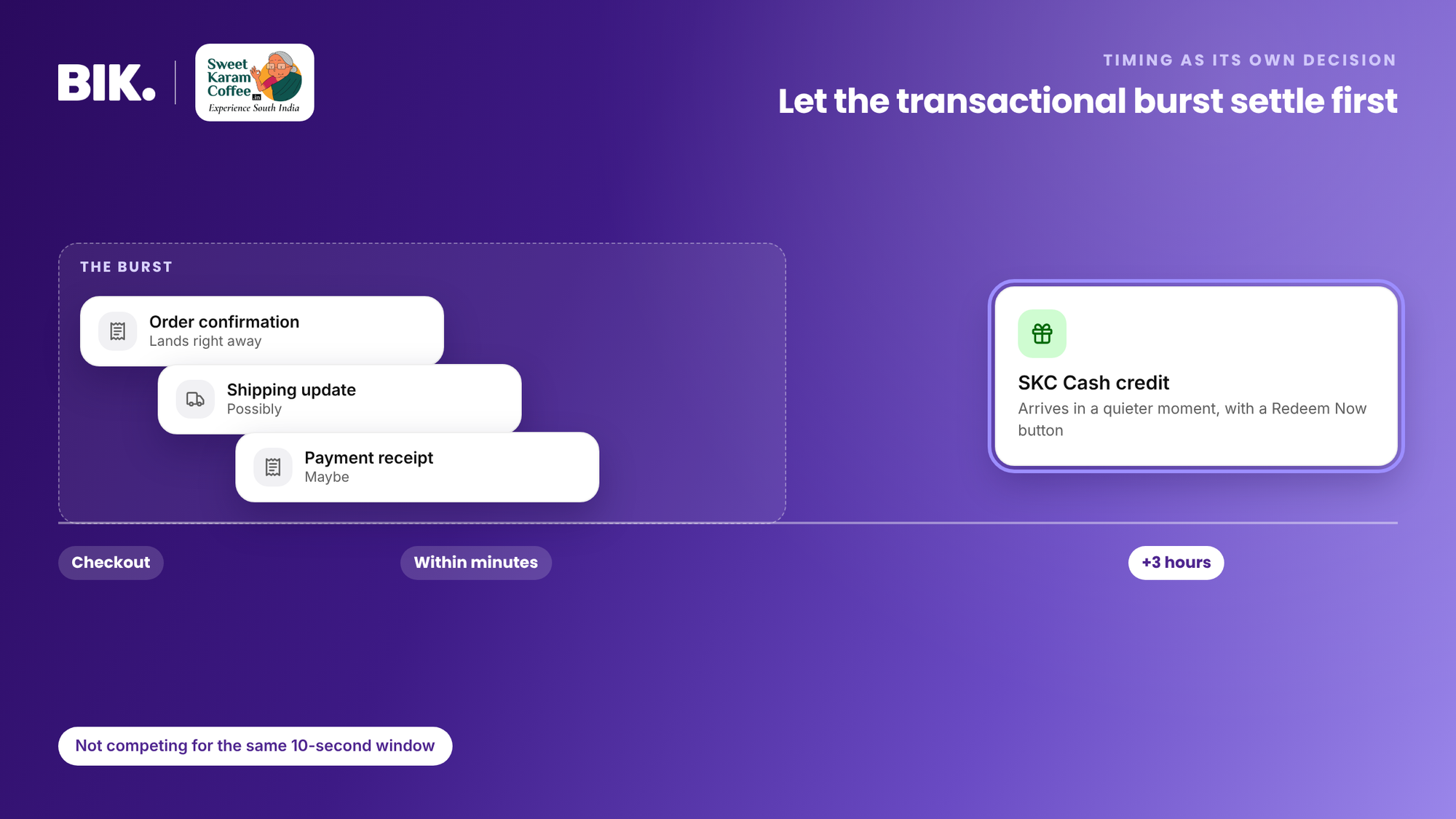
When a customer earns Nector coins from an order, the flow doesn't send the credit notification straight away. It waits three hours. The reasoning becomes clear once you think about what's already arriving in a customer's inbox and WhatsApp right after they buy: an order confirmation, possibly a shipping update, perhaps a payment receipt, all within minutes of checkout. A loyalty coin notification competing with that traffic is likely to get buried, or worse, to add to a pile that makes the whole purchase feel like a flood of notifications instead of a clean transaction.
By waiting three hours, SKC's coin credit message arrives after that initial burst has settled, at a quieter moment when it's more likely to be read than skimmed. It's a small piece of sequencing, but it shows an understanding that not every automated message needs to compete for the same 10-second window after purchase.
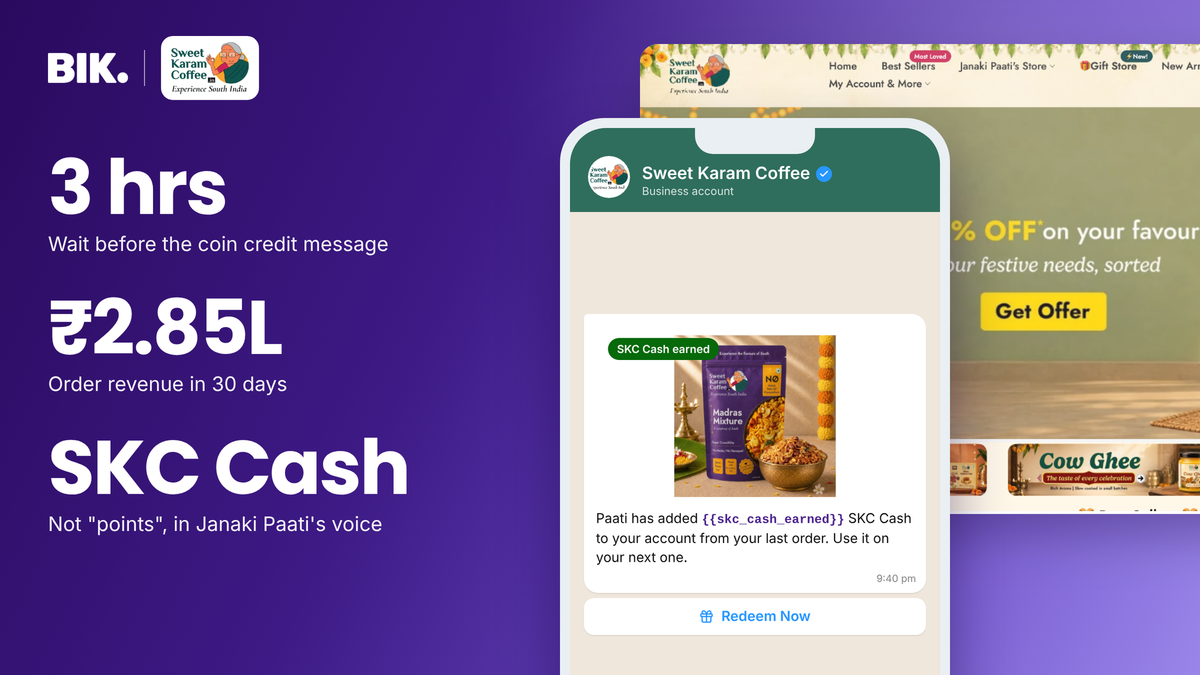
The message carries the same Janaki Paati persona SKC uses elsewhere. It calls the loyalty currency SKC Cash rather than generic "points," shows the exact balance the customer just earned, and encourages redemption on the next order with a Redeem Now button. The mechanic itself is simple. The credit amount comes from a webhook, is stored in a customer variable, and is shown back to the customer three hours later with a clear next step.
In 30 days, this drove ₹2.85L in order revenue. That's less than SKC's expiry-reminder flow, and the reason is worth stating plainly. An expiry reminder carries loss-aversion pressure (redeem now or lose it), whereas a credit notification is simply good news with no urgency attached. Good news alone tends to convert less aggressively than the threat of losing something, and the gap between the two flows illustrates that difference honestly. Neither flow is underperforming.
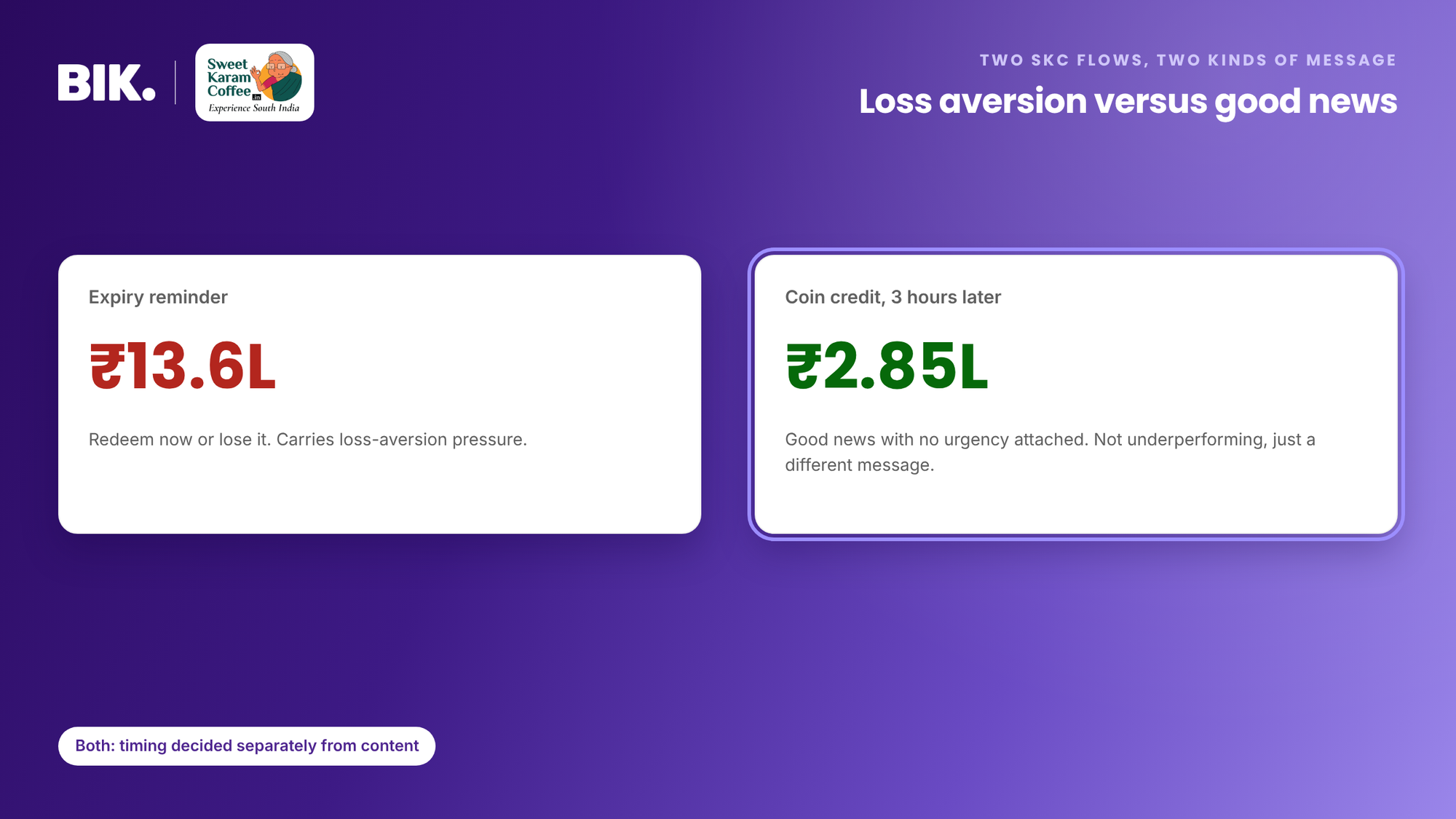
What both SKC flows share, and what's most useful to take from this one, is the discipline of treating timing as its own decision, separate from the content. A well-written message sent at the wrong moment, buried under transactional noise, will underperform the same message sent a few hours later into a quieter inbox. SKC clearly weighed that trade-off instead of defaulting to sending the moment the event fires.
If you send any post-purchase loyalty or reward notification, check its timing against your other messages. Is it landing in the same burst as your order confirmation and shipping updates, or does it have room on its own?
See how this would work on your store
If you want to build a flow like this for your own store, book a meeting with the Manifest AI team and we will walk you through it in a live demo.
