.png)
oVertone Stopped Watching Buyers Leave at the Hardest Question
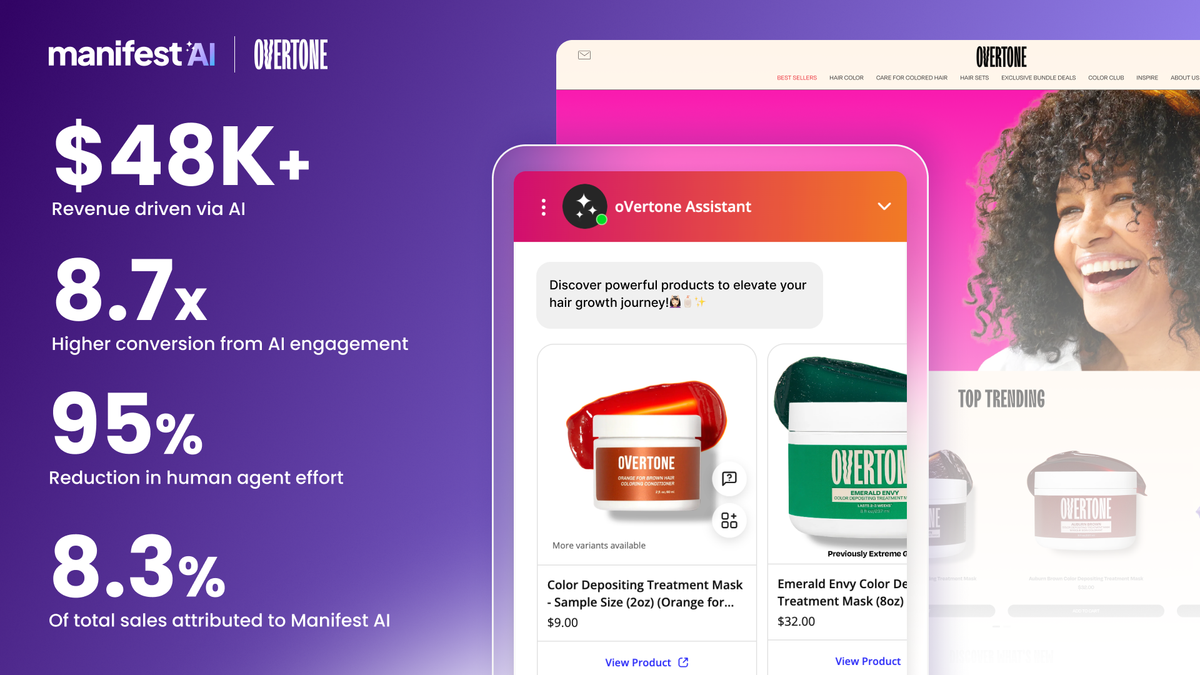
8.7× higher conversions, $48K+ in AI-influenced revenue, and 95% fewer support tickets to handle manually — all from closing one gap: buyers couldn't get answers before they bought.
Shade matching is oVertone's biggest selling point and its most delicate pre-purchase moment. A buyer finds a Midnight Teal on Instagram. They click through. They land on the product page. Then the questions start. Will this work on my level 6 brown? Does the color fade evenly or go brassy? How long does it actually last with frequent washing?
These aren't edge-case questions. They're what every oVertone buyer needs answered before they add to cart. In a category where the whole promise is color that loves your hair — no bleach, no damage, done at home — getting that answer wrong kills the sale. Getting no answer at all does the same thing faster.
The second problem was structural. Instagram and TikTok aren't just channels for oVertone — they're the top of a real purchase funnel. Buyers discover the brand there, research there, and then hit a wall when they try to actually buy. Their previous chatbot required constant manual retraining and couldn't sync with the live Shopify catalog. It was covering less ground with every new SKU they launched.
Who is oVertone?
oVertone makes semi-permanent, damage-free color-depositing conditioners — the at-home alternative to box dye and salon color for people who want vivid hair without the chemicals. Founded by Maegan Scarlett and Liora Dudar, the brand has built a strong Gen Z and millennial following through community-driven content and highly visual social channels. The category is high-consideration by nature: shade matching, hair health, and application accuracy shape every purchase decision, and buyers need real answers before they commit.
The Challenge
Selling hair color online is really a customer education problem. oVertone's buyers compare carefully, ask specific questions about their starting shade, and want to know how the formula will behave on their specific hair before they buy. Their previous tools had no way to handle that at scale.
- No AI to answer shade-matching and formulation queries in real time
- High-intent shoppers leaving product pages with questions unanswered
- A legacy chatbot that needed constant manual training and couldn't sync with the live Shopify catalog
- High social traffic from Instagram and TikTok landing on-site but dropping off before purchase
- Abandoned carts and post-purchase drop-off with no automated recovery in place
What oVertone Deployed
Three components were deployed across the site and their social channels.
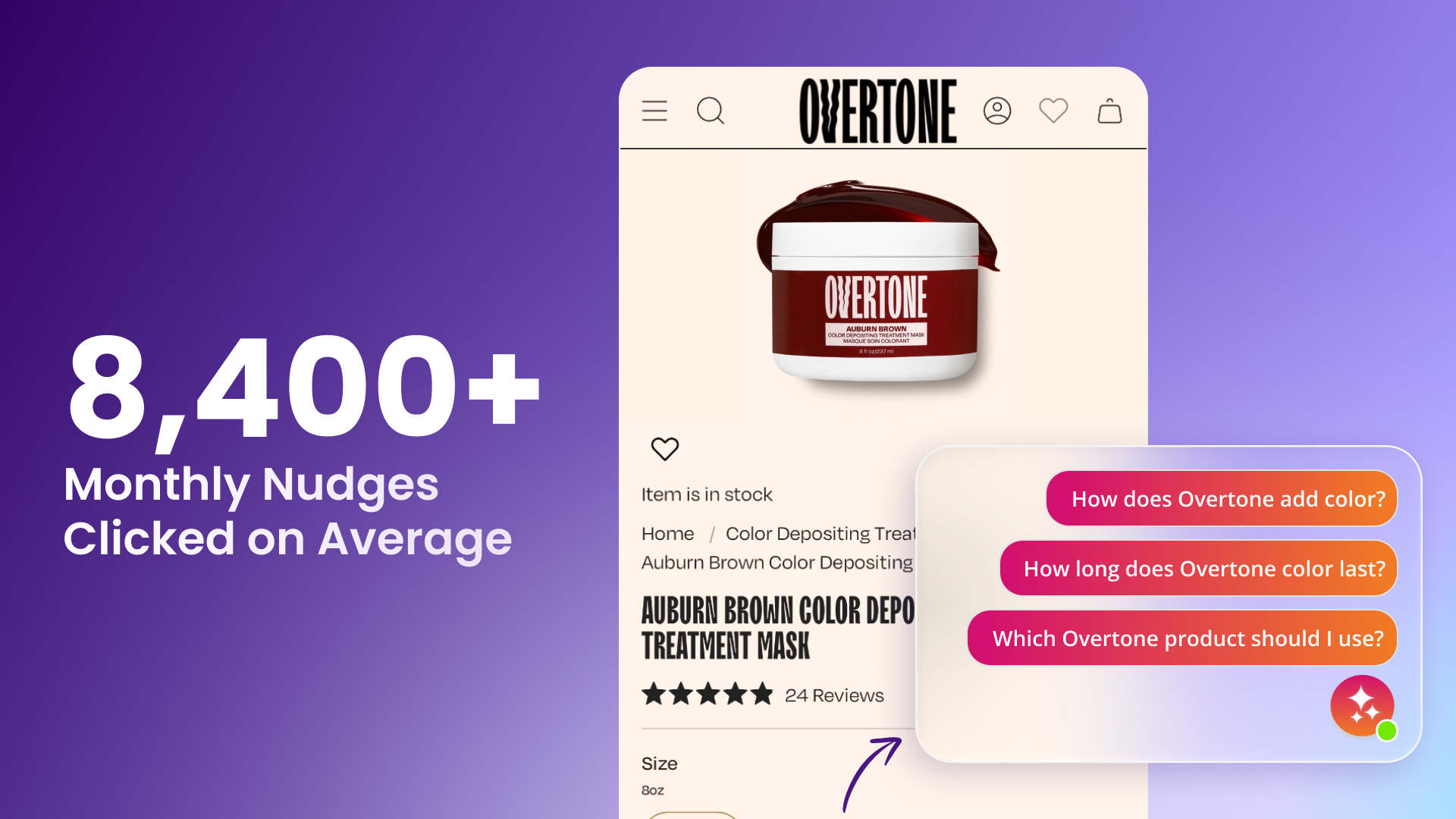
PDP Welcome Nudges. The product page is where shade anxiety peaks. Manifest AI places a floating nudge bar that surfaces the exact questions buyers are already hesitating over — "What ingredients nourish the hair in this mask?" "How long does the color last?" — before they have to go looking for answers themselves. The marketing team trained the nudge logic specifically around oVertone's product catalog and common buyer hesitations. Over the study period, 8,400+ shoppers were guided through the site via PDP nudges, with 80% of sessions generating a reply and active engagement from the buyer.
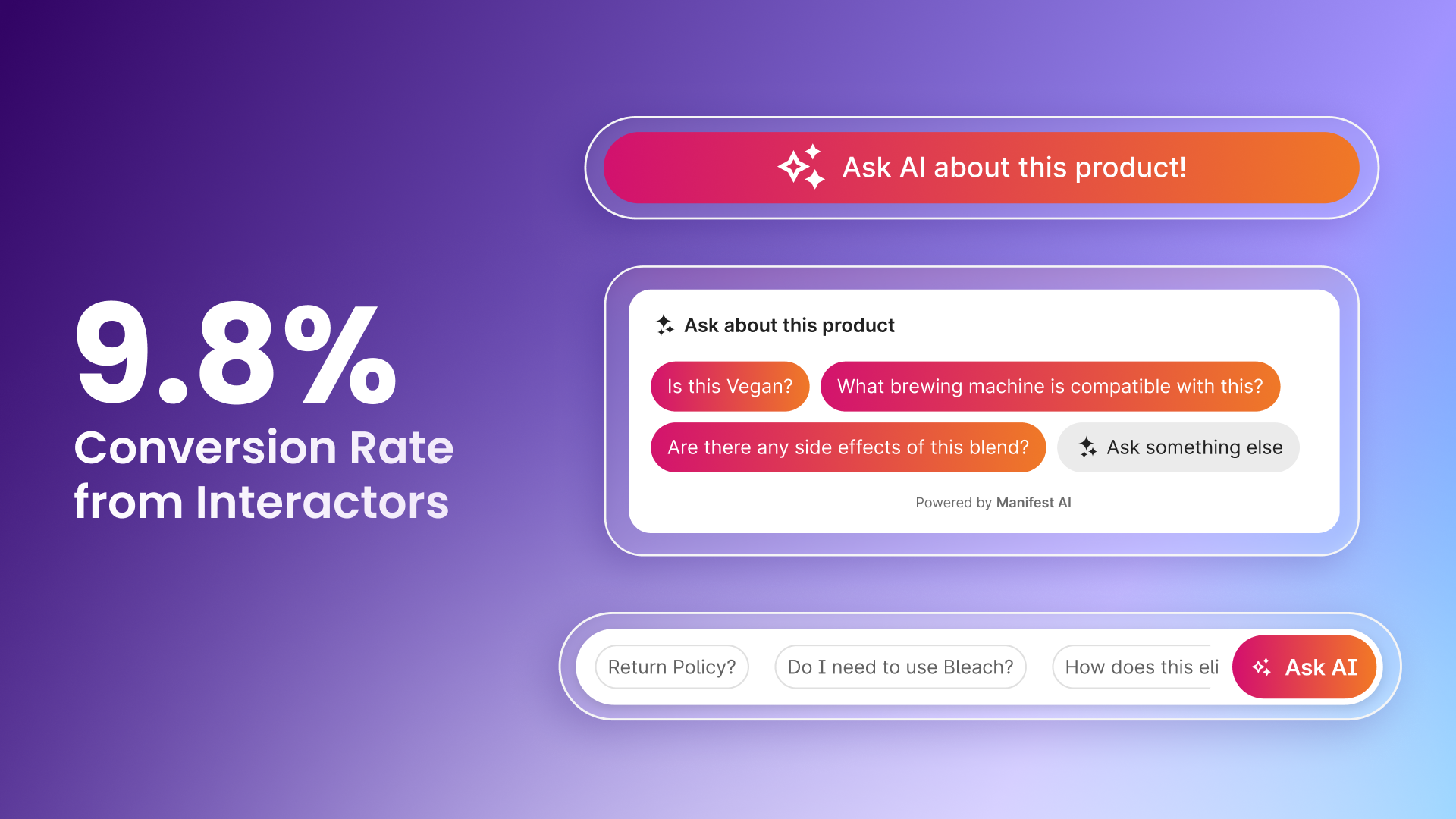
"Ask AI" Embeds. Shade queries are nuanced in a way generic FAQs cannot handle. A buyer with color-treated level 5 hair asking about Midnight Teal needs a different answer than someone starting from bleached blonde. Manifest AI's embeds pull live data directly from the Shopify catalog to respond accurately — formulation specifics, color theory, application steps — with a product link and add-to-cart button in the same message. The AI was resolving these queries within the first week of go-live. Buyers who engaged with it averaged $50+ per order, compared to $48.93 for those who did not.
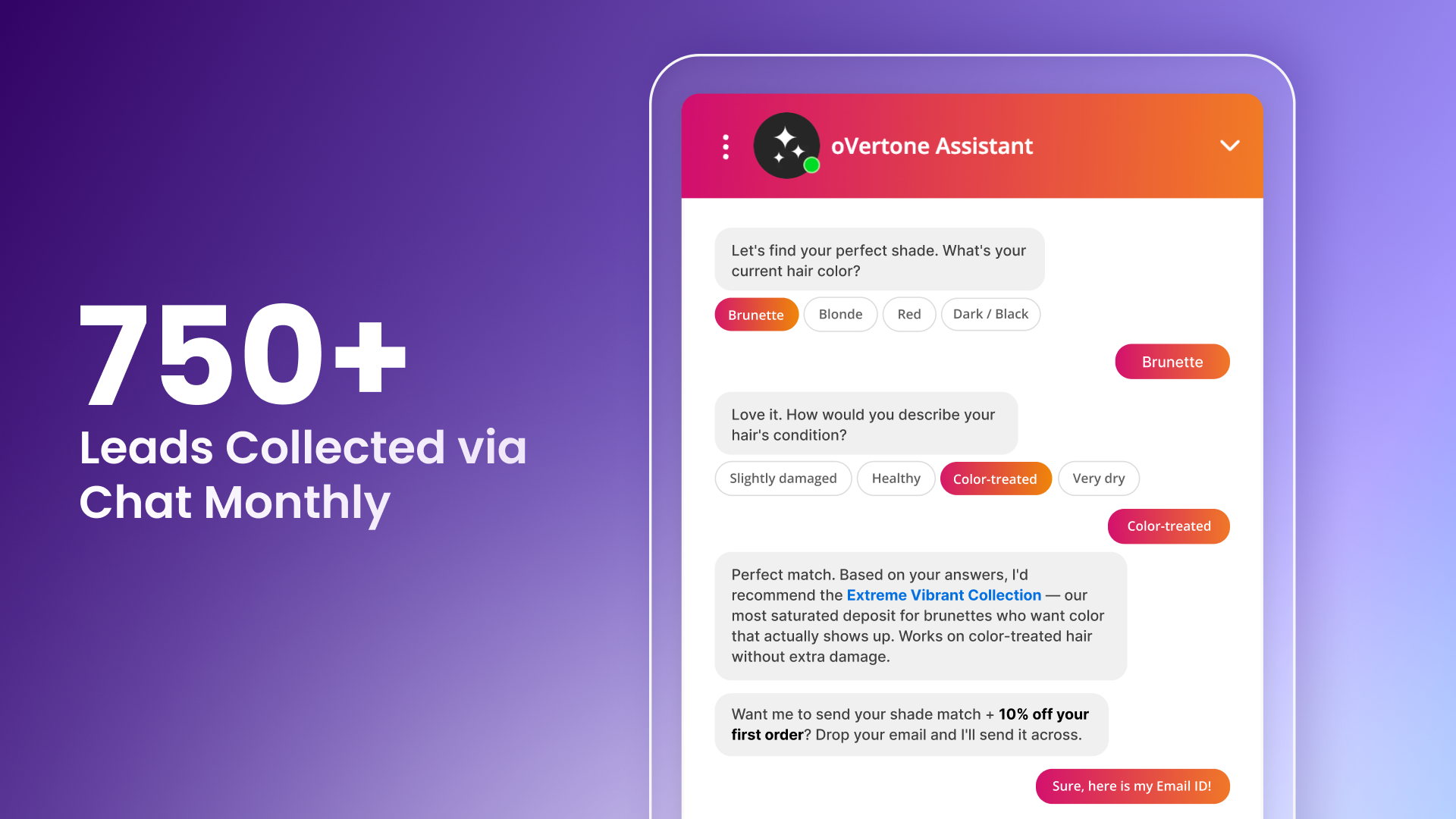
Lead Collection in Chat. Not every visitor buys on the first visit. Manifest AI captures emails directly inside the chat conversation, turning browsing sessions into retargetable leads without a separate pop-up or form. For oVertone, this ran alongside the product assistant — a buyer asking about shade compatibility would get an answer, then a prompt to stay in the loop. The result: 750+ leads collected via chat in 30 days, at a 9.8% conversion rate from interactors — buyers who engaged with the AI converted at 8.7× the rate of those who did not.
The Results (Last 30 Days)
Revenue: The deployment drove $48K+ in AI-influenced revenue, with AI-engaged shoppers averaging $50+ in order value and 8.3% of total D2C revenue attributed to AI-assisted conversations.
Conversion: Shoppers who interacted with the AI converted at 8.7× the rate of those who did not. The overall conversion rate from interactors was 9.8%, with 750+ leads collected via chat.
Support: 10,000+ queries were automated instantly, with a 78%+ CSAT score across all AI conversations and a 95% reduction in agent effort.
Engagement: 11,209 AI-led interactions and queries completed over the period, with 8,400+ shoppers guided via PDP nudges and 80% of sessions generating active engagement.
For oVertone, the sale has always lived or died on buyer confidence. What these numbers show is that the buyers who previously left with unanswered questions are now converting. The AI did not just reduce support load — it became part of how oVertone sells color online.
Want to see what this looks like for your brand?
The numbers above reflect oVertone's specific product complexity, buyer behavior, and 30-day window. If customers are leaving your product pages before they get the answers they need, that gap is worth a conversation.