.png)
Underneat Stopped Losing Buyers at the Sizing Question
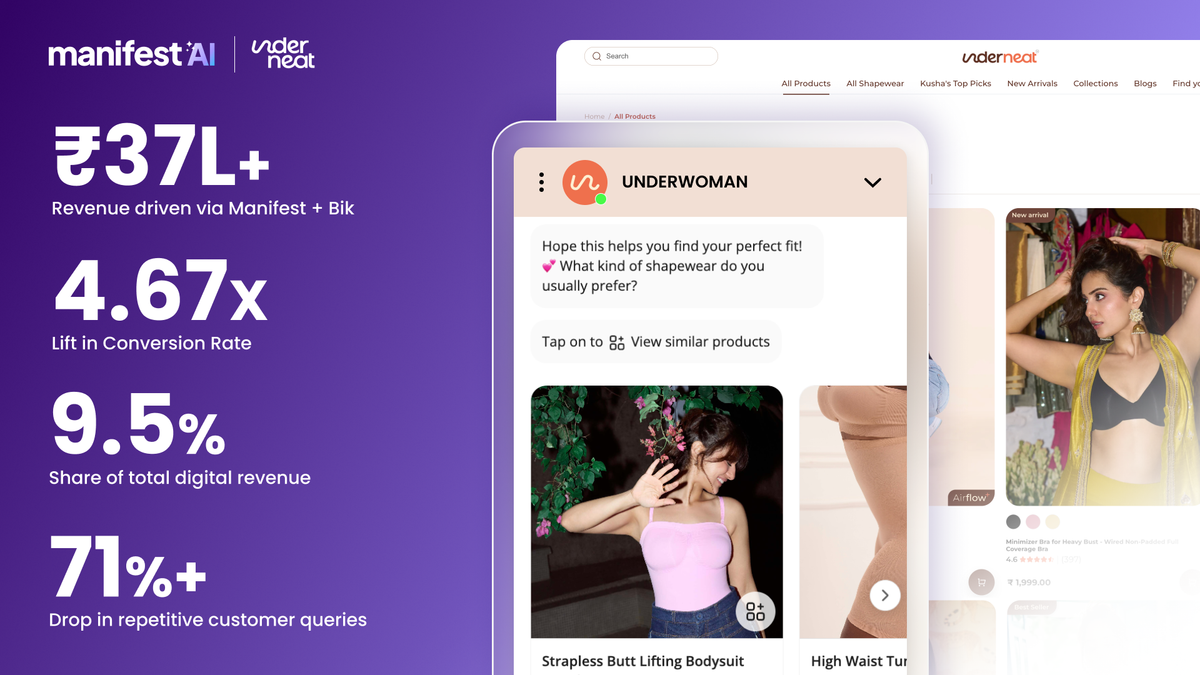
₹37L+ in 30 days, a 4.67X conversion lift, and 60%+ fewer repetitive queries. All from solving the one question that stalls every shapewear sale: will this actually fit me?
A buyer finds Underneat through Kusha Kapila's Instagram. She clicks through to a Short Sleeve Bodysuit. Then the real questions start. Will the fabric breathe in 38 degree heat? Will the high-waist roll down when she wears it under a saree? She wears a medium in one brand, but the sizing runs different here. So what does she actually pick?
In shapewear, these aren't optional questions. They're the questions. A buyer who can't answer them either leaves the page, or orders three sizes intending to return two. Both outcomes are expensive. The first kills the sale. The second eats the margin.
Underneat already had a WhatsApp tool that handled the basics: order tracking, catalog browsing, broadcasts. But it couldn't talk fabric, fit, or coverage. The hardest part of the buyer's journey was happening in silence, on the product page, with no way to intervene.
Who is Underneat?
Underneat is a body-inclusive D2C shapewear and innerwear brand built for Indian bodies, climates, and silhouettes. Co-founded by Kusha Kapila and Vimarsh Razdan, the brand has grown on a 15 to 20 day drop cycle across bras, bodysuits, shapewear, and essentials. Most discovery happens on Instagram, riding Kusha's creator audience. The category is high-anxiety and high-return: a buyer who isn't sure about size or fabric either bounces, or buys three sizes and sends two back. Confidence drives every conversion.
The Challenge
Shapewear isn't a comparison-shop category. It's a confidence category. Buyers want a fitting room consultation, not a checkout button. Underneat's existing setup wasn't built for that level of guidance.
- No AI on the website to consult on body type, compression level, fabric breathability, or use case
- WhatsApp flows were strong on transactional queries (orders, tracking) but couldn't advise on fit
- Instagram DMs were running on template replies that broke the moment a buyer asked something specific
- The support team was answering the same fabric, sizing, and coverage queries manually, all day
- No intelligent discovery flow to match a hesitating shopper to the right SKU before she left
What Underneat Deployed
Underneat layered Manifest AI on top of Bik's existing infrastructure. Three things changed across the buyer journey.
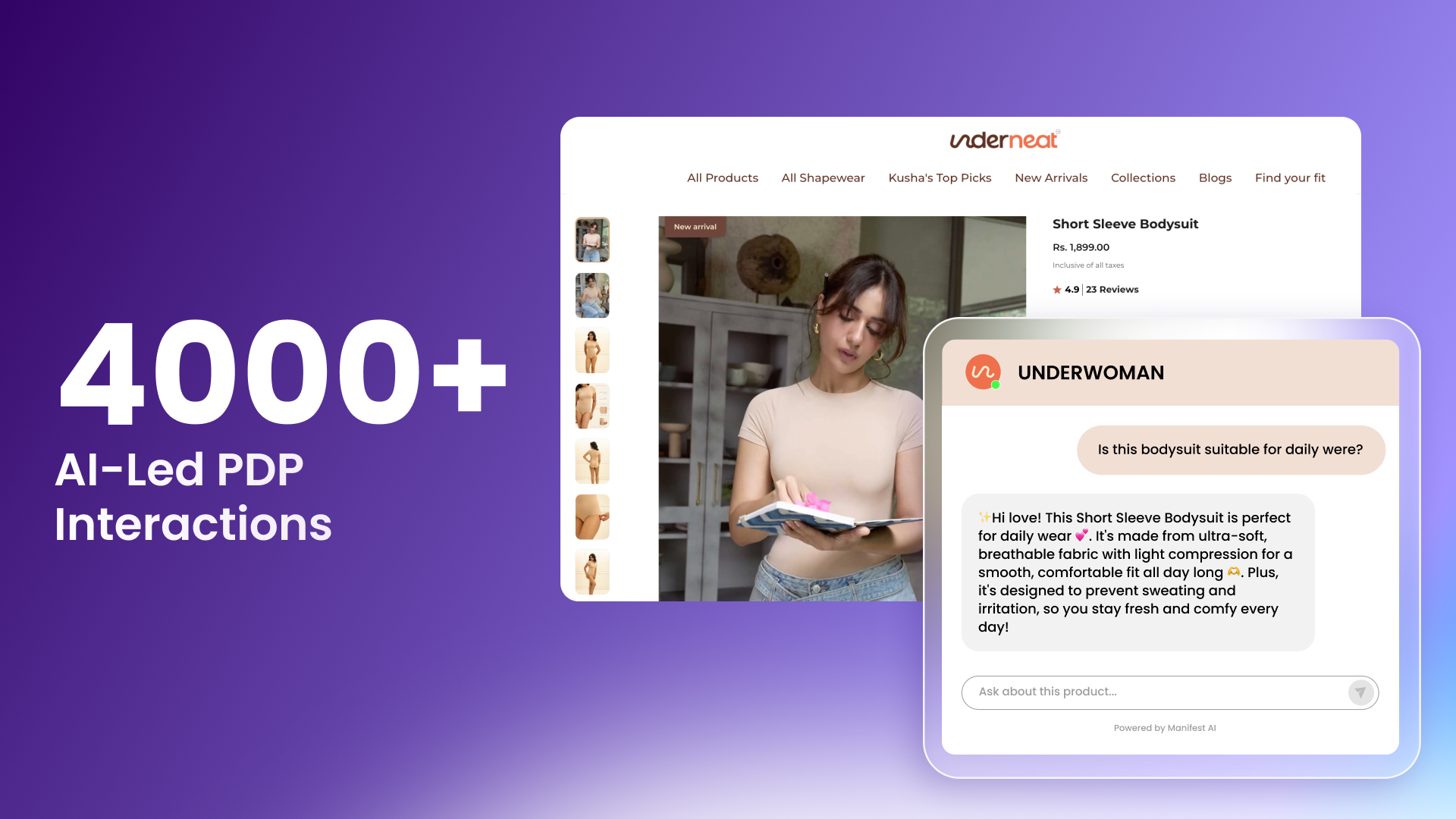
The product page is where shapewear sales live or die. Manifest AI deployed a product assistant directly on every PDP, capable of answering specific questions about fabric stretch, compression level, coverage, breathability, and use case. A buyer asking "is this bodysuit suitable for daily wear" gets a precise answer back, with context on fabric, support, and skin sensitivity. Floating nudges proactively surface the questions buyers are already hesitating over, so the AI starts the conversation before the back button gets clicked. Over the study period, the PDP layer drove 4,141 AI-led interactions across product pages.
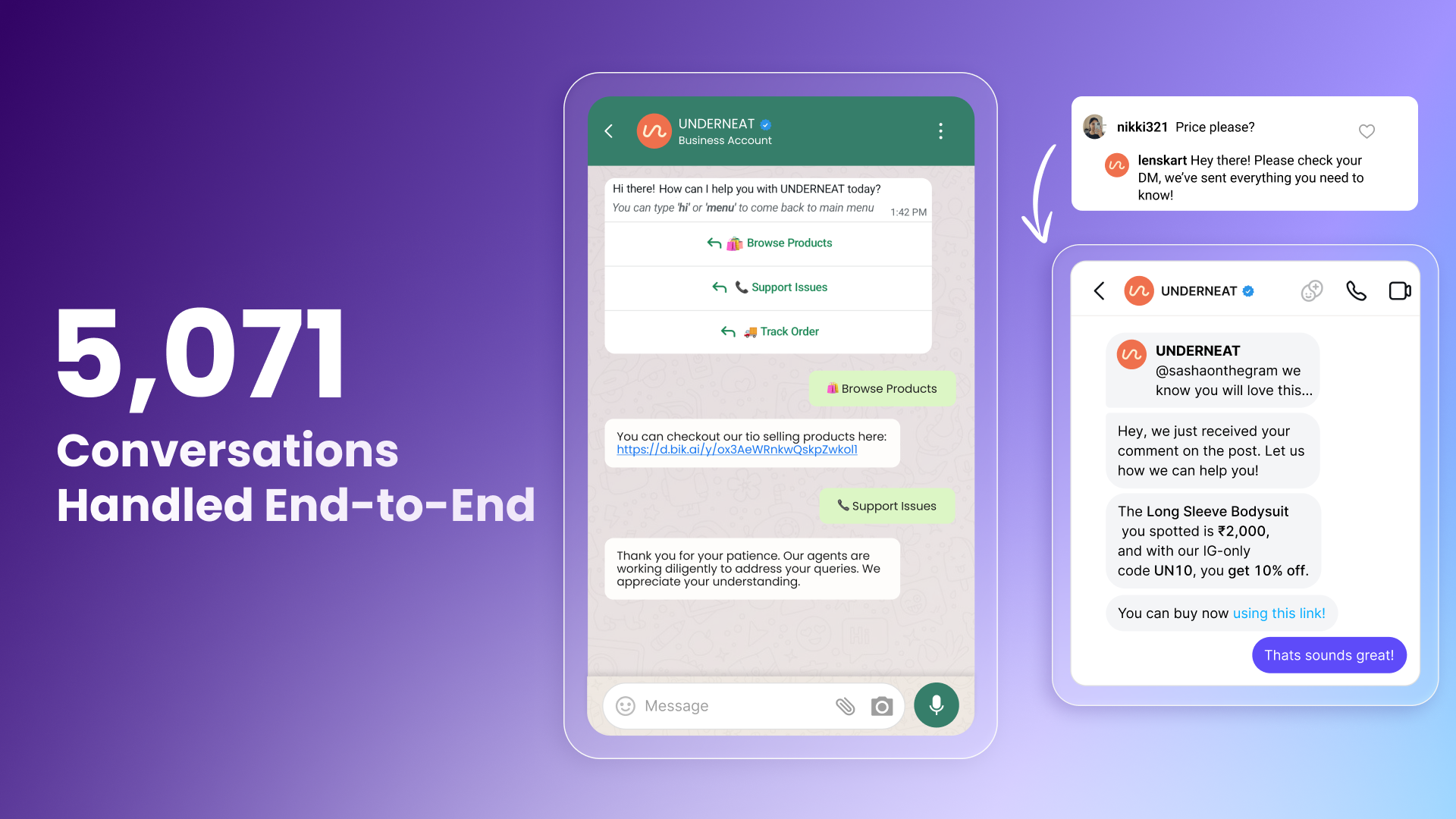
Underneat's strongest discovery channels are also where most buyer hesitation lives. The Bik and Manifest stack upgraded WhatsApp from transactional to consultative. A buyer who comments "Price please?" on Instagram gets a real product recommendation in DMs, with pricing, an IG-only discount code, and a direct purchase link. The same intelligence runs through WhatsApp, where buyers can browse the catalog, get fit advice, and track orders inside one continuous thread. Across both channels, the system handled 5,071 conversations end-to-end, with 98%+ satisfaction.
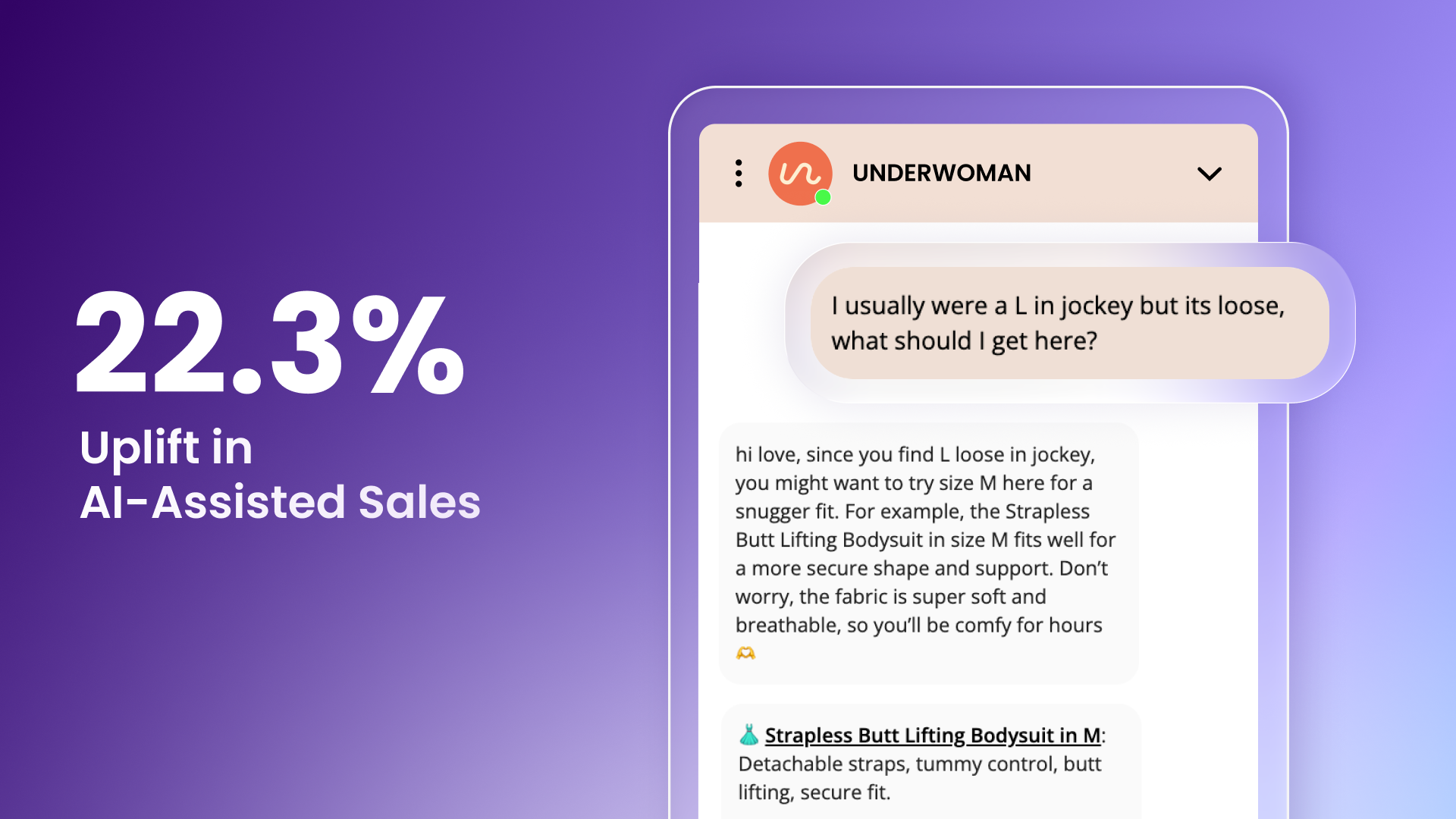
Not every buyer converts on the first visit, and shapewear especially needs a second touchpoint. Manifest AI's lead capture flows convert browsing sessions into retargetable WhatsApp shoppers inside the conversation itself, no separate popup, no friction. A buyer asking "I usually wear L in jockey but it's loose, what should I get here?" gets a specific size recommendation, a product link, and a prompt to receive their fit guide on WhatsApp. The result: a retargeting pool of buyers who already know what they want, feeding the marketing engine directly. Shoppers who engaged with the AI converted at 8.4%, delivering a 22.3% uplift in assisted sales.
The Results (October to November 2025)
Revenue: The deployment drove ₹37L+ in revenue through Manifest and Bik, contributing 9.5% of total digital revenue with a 4.67X conversion uplift versus non-interactors.
Orders: Over 1,500 orders were driven by AI conversations, with chat interactors converting at 8.4% and AI-assisted sales seeing a 22.3% uplift.
Support: The team automated 5,200+ queries instantly, dropped repetitive customer queries by 60%+, and held a 98%+ satisfaction score across all AI sessions.
Engagement: 4,141 AI-led PDP interactions plus 5,071 end-to-end conversations across WhatsApp and Instagram, with 83% of sessions generating active replies and engagement.
When the Product Became the Campaign
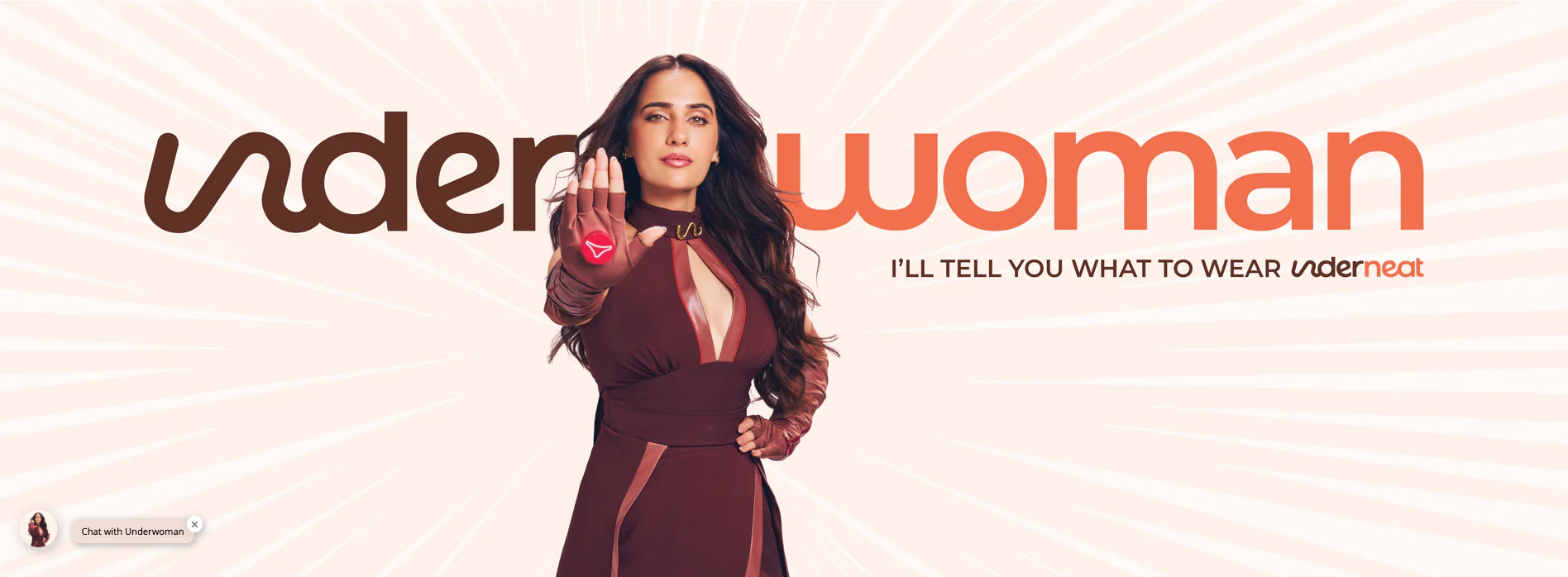
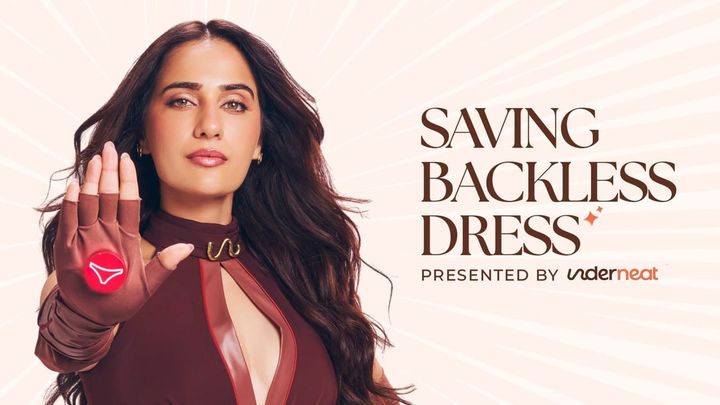
In early 2025, Underneat launched the Underwoman campaign with Kusha Kapila. The premise: every woman has a superhero version of herself, an Underwoman who knows exactly what she should wear underneath. The fabric, the fit, the right cut for the outfit. The campaign needed a character that could actually do that.
That character was Manifest AI.
Underwoman wasn't a mascot drawn around the product. Underwoman is the product. The AI that consults on fit, breathability, body type, and coverage is the same intelligence Kusha was personifying in the campaign creative. The widget on Underneat's homepage doesn't say "Chat with us." It says "Chat with Underwoman." The tagline "I'll tell you what to wear UNDERNEAT" isn't copywriting. It's literal AI behavior, running live on the site.
Most software gets deployed. Underneat built a brand campaign around what theirs can do.
In a category where the first question is "will this actually fit me," removing the friction at that exact moment is the entire game. The numbers above are what happens when a brand stops treating consultation as a support problem and starts treating it as a conversion lever.
Want to see what this looks like for your brand?
The numbers above reflect Underneat's specific category, audience, and 30-day window. If sizing doubt is the gap your buyers are falling through, that conversation is worth having.