.png)
BIK Product Update July'26
BIK July updates: Journey Score shows where automation revenue is leaking, Agent Form Sharing collects structured data mid-conversation, and Custom Fields bring personal customer data into campaigns.
Welcome back to BIK – News, your monthly product update.
BIK now shows you what to do next and why.
Three features this month that go beyond shipping tools. One tells you exactly where you're leaving revenue on the table. One eliminates the back-and-forth of collecting customer data. One makes your campaigns feel like they actually know the customer.
Let's dive in 👇
Journey Score & Recommendation Engine - BIK now tells you where you're leaving revenue.
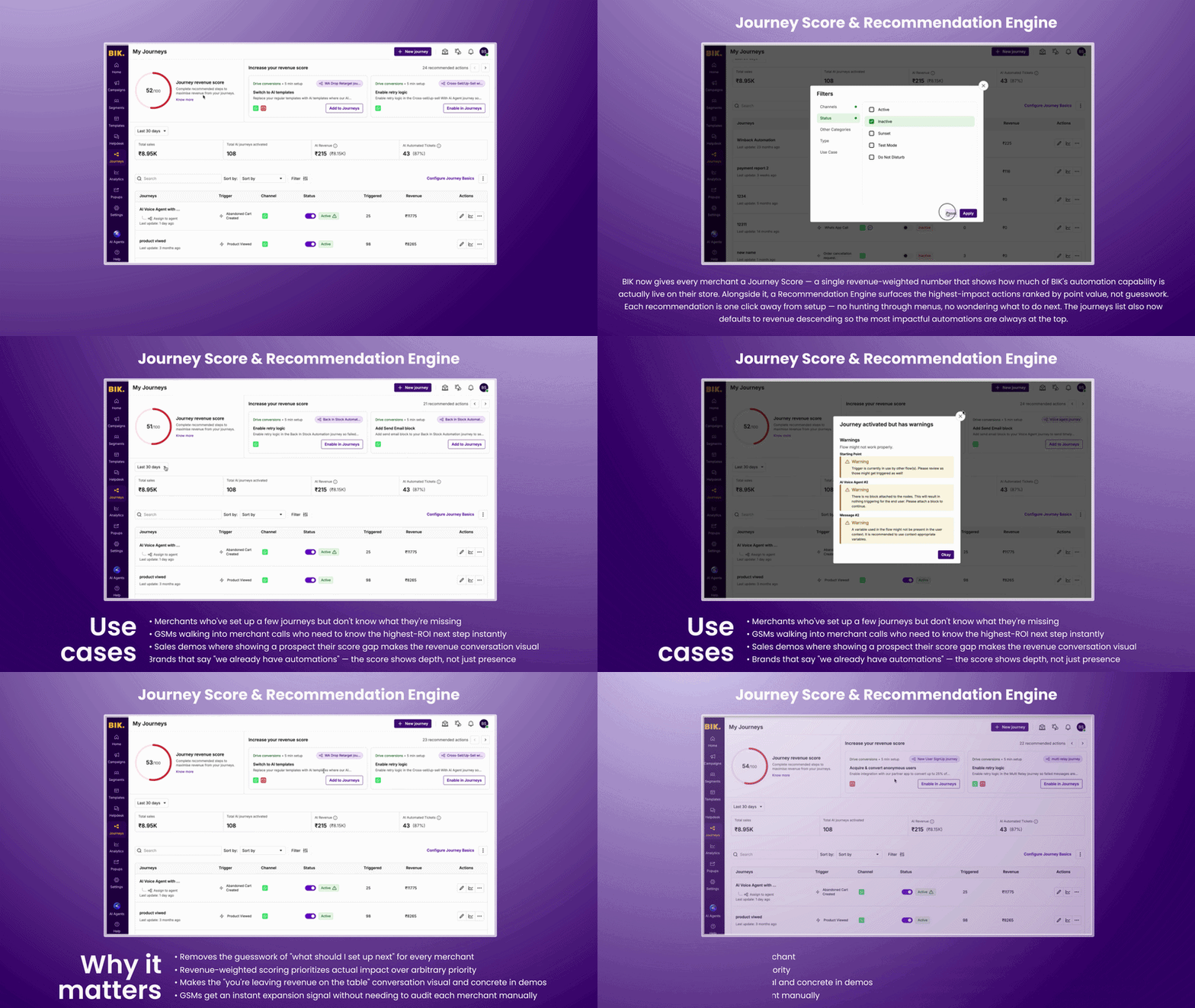
BIK now gives every merchant a Journey Score, a single revenue-weighted number that shows how much of BIK's automation capability is actually live on their store. Alongside it, a Recommendation Engine surfaces the highest-impact actions ranked by point value, not guesswork. Each recommendation is one click away from setup and no hunting through menus, no wondering what to do next. The journeys list also now defaults to revenue descending so the most impactful automations are always at the top.
Use cases:
- Merchants who've set up a few journeys but don't know what they're missing
- GSMs walking into merchant calls who need to know the highest-ROI next step instantly
- Sales demos where showing a prospect their score gap makes the revenue conversation visual
- Brands that say "we already have automations", the score shows depth, not just presence
Why it matters:
- Removes the guesswork of "what should I set up next" for every merchant
- Revenue-weighted scoring means recommendations are ranked by actual impact, not arbitrary priority
- Makes the "you're leaving revenue on the table" conversation visual and concrete in demos
- GSMs get an instant expansion signal without needing to audit each merchant manually
Agent Initiated Form Sharing - Stop asking customers the same thing twice.
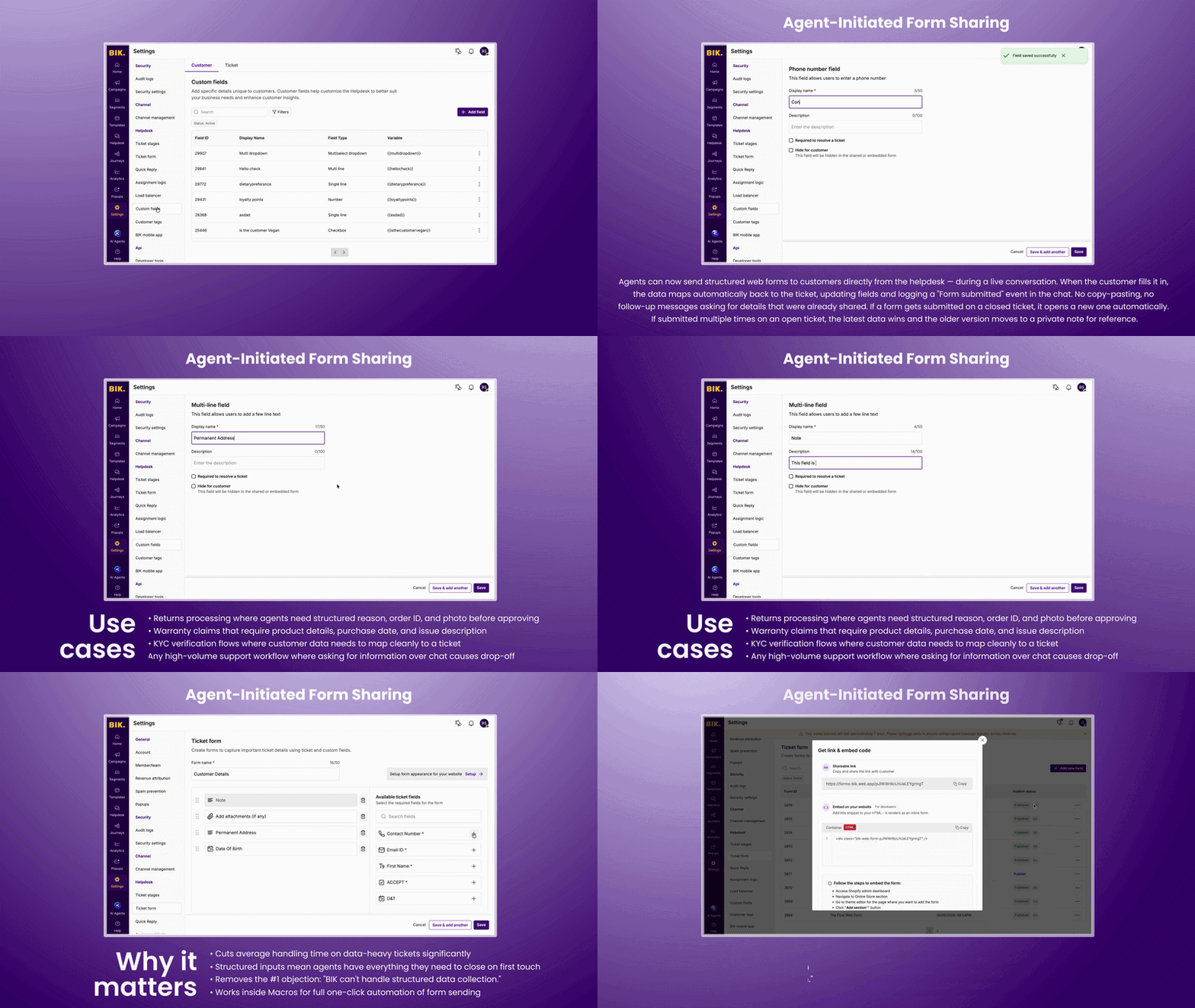
Agents can now send structured web forms to customers directly from the helpdesk during a live conversation. When the customer fills it in, the data maps automatically back to the ticket, updating fields and logging a "Form submitted" event in the chat. No copy-pasting, no follow-up messages asking for details that were already shared. If a form gets submitted on a closed ticket, it opens a new one automatically. If submitted multiple times on an open ticket, the latest data wins and the older version moves to a private note for reference.
Use cases:
- Returns processing where agents need structured reason, order ID, and photo before approving
- Warranty claims that require product details, purchase date, and issue description
- KYC verification flows where customer data needs to map cleanly to a ticket
- Any high-volume support workflow where asking for information over chat causes drop-off
Why it matters:
- Cuts average handling time on data-heavy tickets significantly
- Structured inputs mean agents have everything they need to close on first touch
- Removes the #1 objection in complex support deals - "BIK can't handle structured data collection"
- Works inside Macros for full one-click automation of form sending
Custom Fields in Campaigns - Your campaigns can finally say the right thing to the right person.
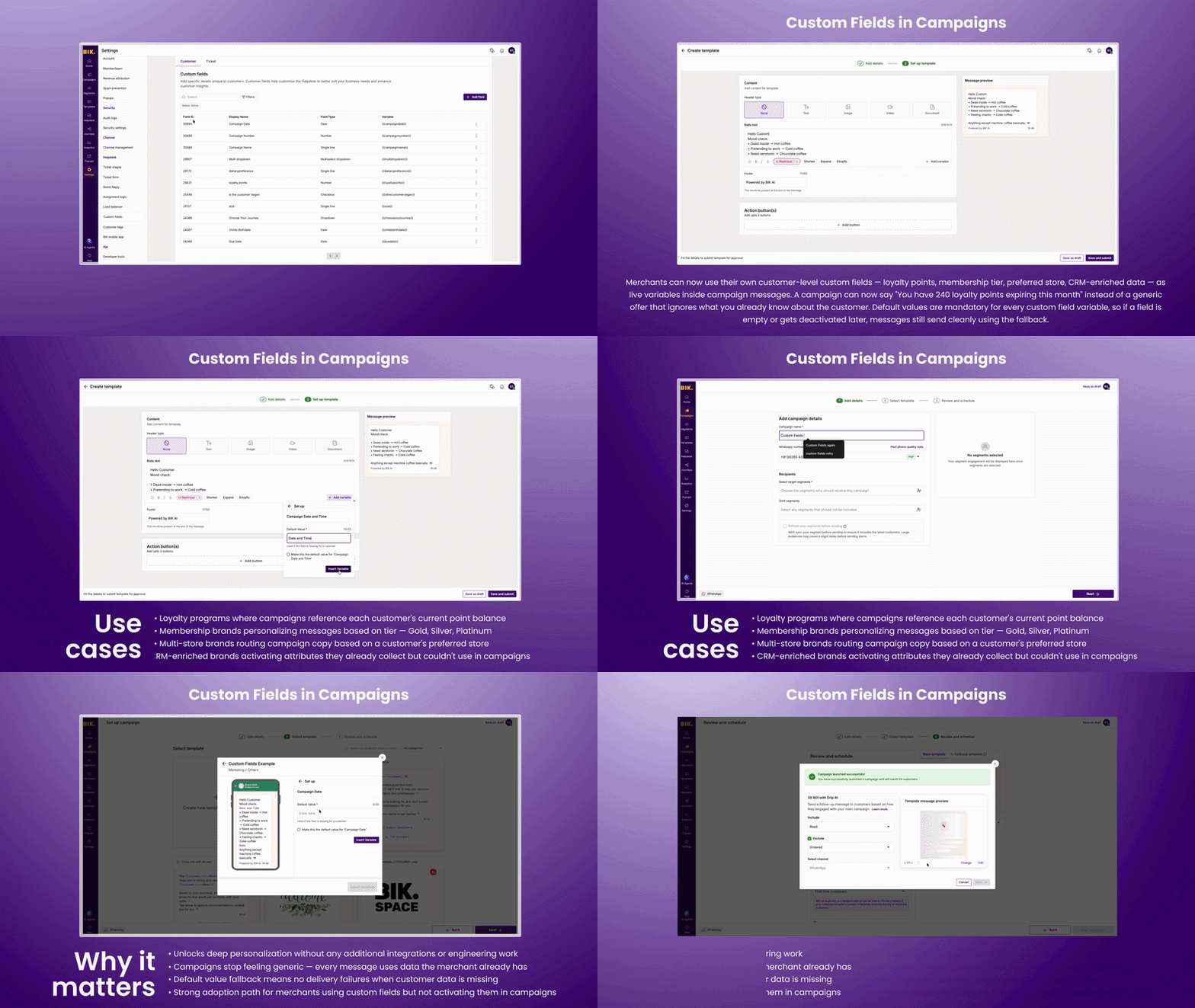
Merchants can now use their own customer-level custom fields like loyalty points, membership tier, preferred store, CRM-enriched data, as live variables inside campaign messages. A campaign can now say "You have 240 loyalty points expiring this month" instead of a generic offer that ignores what you already know about the customer. Default values are mandatory for every custom field variable, so if a field is empty or gets deactivated later, messages still send cleanly using the fallback.
Use cases:
- Loyalty programs where campaigns reference each customer's current point balance
- Membership brands personalizing messages based on tier - Gold, Silver, Platinum
- Multi-store brands routing campaign copy based on a customer's preferred store
- CRM-enriched brands activating attributes they already collect but couldn't use in campaigns
Why it matters:
- Unlocks deep personalization without any additional integrations or engineering work
- Campaigns stop feeling generic — every message uses data the merchant already has
- Default value fallback means no delivery failures when customer data is missing
- Strong adoption path for merchants already using custom fields but not activating them in campaigns
More launches this month
Customer Memory Personalisation - "Hi Jane, welcome back." Three words that change everything.
Manifest AI now remembers customers across conversations and acts on it. A returning shopper is greeted by name with a personalised welcome note. Their email and phone captured once via lead collection or agent handover are never asked for again. Every order they've tracked is saved in CRM so your team sees the full history right alongside the conversation. The difference between Manifest AI and a generic chatbot used to be features. Now it's continuity and that's a much harder gap to close.
3rd Party Integrations in Order Tracking - Manifest AI just got a lot bigger.
Order tracking in Manifest now works on BigCommerce, the "we only support Shopify" conversation is over. AfterShip can be layered on top of any order source to enrich tracking data with more detail. Custom Fields let merchants map any payload field directly, or write a plain-language prompt and let Manifest derive the value at runtime, useful for things like returning the latest delivery date across multiple shipments. And Message Prompt lets merchants write a prompt that generates a personalised buyer-facing message from real order data right at the bottom of the tracking view.
👋 That’s a wrap
You made it to the end - you’re now 5x more AI-savvy than you were 5 minutes ago. Got feedback? Send us an email at support@bik.ai, we read every single message.
Until next time,
BIK Team